

AI powered SEO optimization is no longer a luxury-it’s becoming the standard way successful companies improve their rankings and site performance. Machine learning algorithms now handle tasks that used to require weeks of manual work, from identifying search intent to spotting content gaps.
At Emplibot, we’ve seen firsthand how AI transforms SEO strategy when used correctly. The real challenge isn’t adopting these tools; it’s knowing when to trust automation and when human judgment matters most.
How AI Reshapes Your SEO Approach
Search intent has always mattered, but traditional SEO methods miss what modern algorithms now catch instantly. Google processes 8.5 billion searches daily, and machine learning analyzes query patterns, user behavior, and contextual signals faster than any manual analysis could. When someone searches for eco-friendly running shoes, AI doesn’t just match keywords-it understands they want sustainable products, specific price ranges, and performance reviews. This shift means your content strategy must align with machine learning algorithms, not what keywords sound relevant. Tools like Semrush and Ahrefs now cluster keywords by semantic intent, grouping related searches into actionable topic groups. You stop writing generic content and start building pages that answer the exact questions your audience asks.
Where AI Finds Your Content Gaps
Content gaps aren’t theoretical anymore-AI identifies them with measurable precision. Machine learning scans your site against top-ranking competitors and surfaces exactly which subtopics, questions, and angles you’re missing.
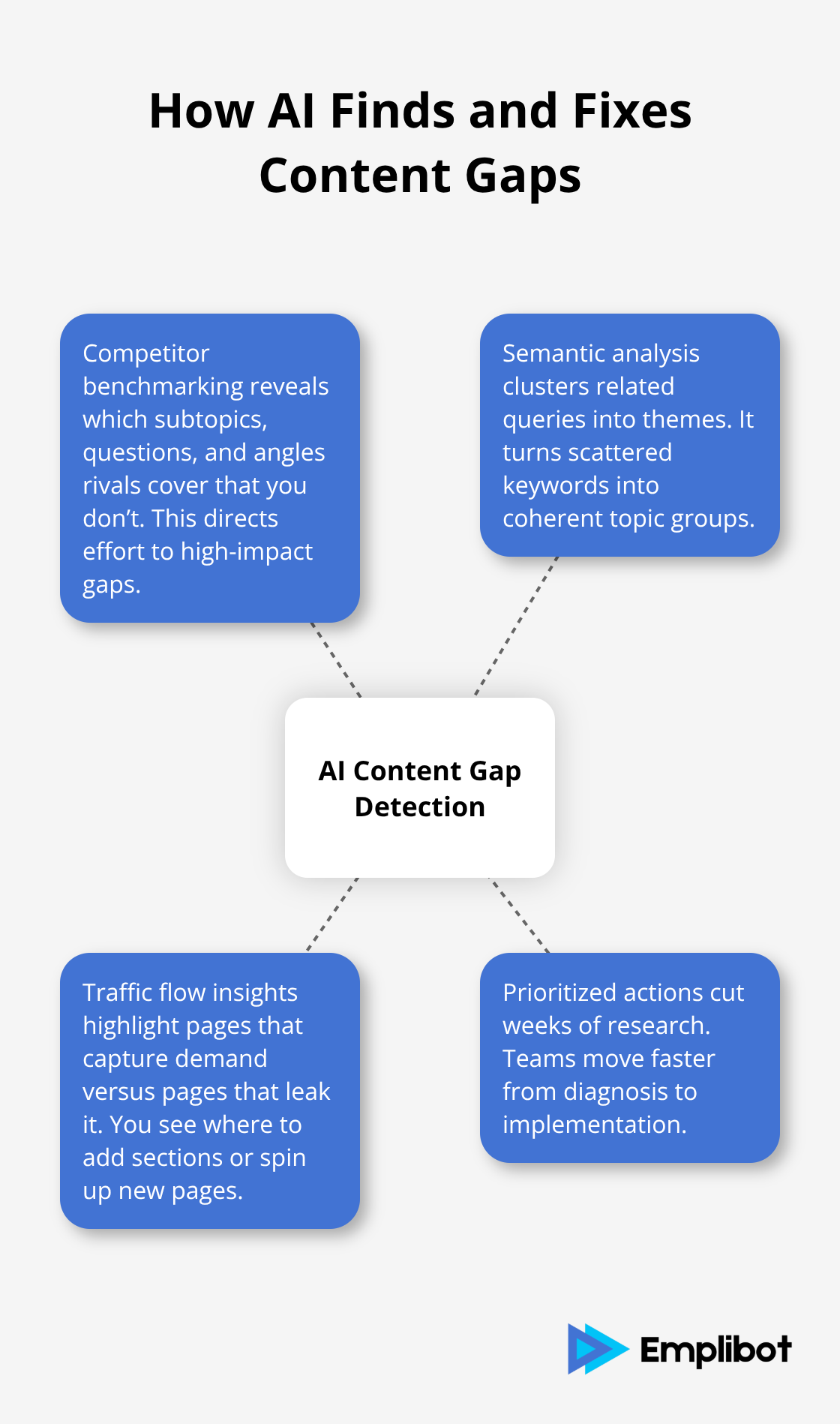
A sustainable fashion retailer using AI-driven tools discovered they ranked for general terms but had zero content on eco-certifications and supply chain transparency-topics their competitors dominated. They filled those gaps and grew organic traffic in the following months. This isn’t guesswork; AI analyzes hundreds of thousands of ranking signals in real time to show which pages capture traffic and which ones leak it. You spend weeks less researching and months faster implementing strategy.
Keyword Research That Actually Saves Time
Automated keyword research cuts through noise by forecasting search volume trends weeks in advance. Instead of manually checking keyword difficulty and search volume one by one, AI tools now predict which topics will trend and assign priority scores instantly. One e-commerce platform using AI-powered research identified emerging search patterns for niche products three months before competitors, gaining first-mover advantage. The speed matters because search patterns shift constantly, and AI adapts to these changes automatically, flagging new opportunities and declining keywords so your team focuses on winners. Your content calendar stays ahead rather than chasing yesterday’s trends, which means you’re ready to explore how these insights translate into concrete optimization tactics.
AI Tools That Actually Deliver Results
Content Optimization Platforms Show What Works
Platforms like Surfer SEO and Frase reveal exactly which sections drive traffic and which ones waste space. Surfer analyzes top-ranking pages and compares your content against them, identifying missing subtopics, keyword density gaps, and structural weaknesses with precision. One e-commerce site using Surfer found that their product descriptions lacked comparison sections that competitors ranked for; adding these sections boosted their CTR by 18% within four weeks. AI-powered analytics tools connect search performance directly to engagement metrics, showing which content angles actually convert visitors. A software company tracked this connection and found that pages answering specific technical implementation questions had 38% longer session duration and 27% lower bounce rates than pages focused on general features.
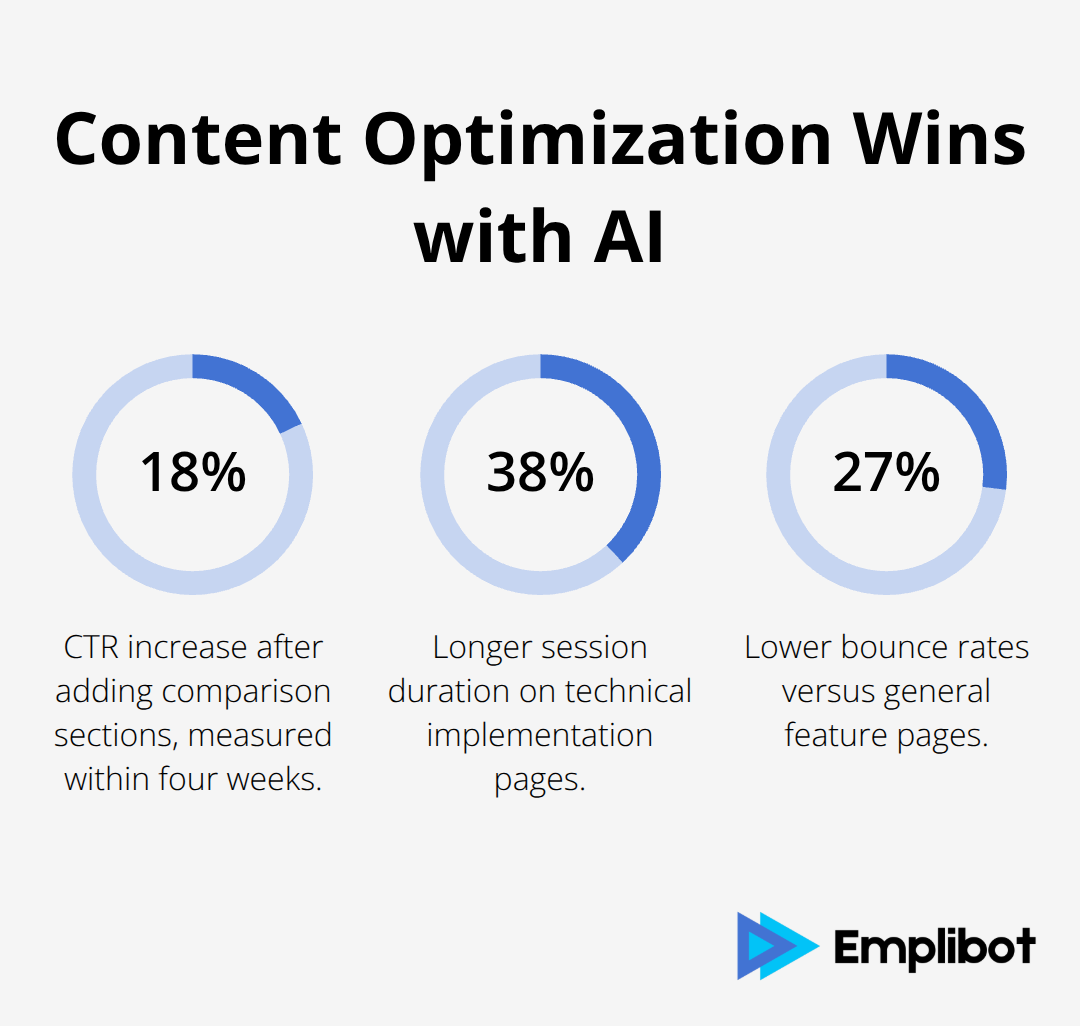
This insight transformed their content strategy from broad overviews to problem-solving guides.
Technical SEO Audits Catch What Plugins Miss
AI-powered technical audits scan crawl patterns, identify 404s, orphaned pages, and redirect chains automatically, then prioritize fixes by traffic impact. One publisher found 200 orphaned pages wasting crawl budget and fixed the top 40 within a week, recovering 15% in organic traffic. Automated monitoring catches technical problems before they tank rankings-broken internal links, slow page loads, and indexation issues trigger alerts instantly rather than surfacing weeks later in manual audits.
Metadata and Schema Optimization Run on Autopilot
AI-driven metadata optimization tests multiple title and meta description variations automatically, deploying winners without manual intervention. Search results change constantly, and human teams cannot test fast enough to keep pace. Schema markup automation prevents the malformed structured data that cripples rich results visibility. One workflow reduced malformed markup from 23% to near zero within two weeks by auto-injecting schema fields at publish time. Core Web Vitals optimization using predictive AI enhances user experience, engagement, and conversions by continuously monitoring, detecting, and fixing performance issues. An online publisher upgraded their Core Web Vitals from Poor to Good in two weeks using this method, driving a 22% organic traffic boost.
Backlink Analysis Protects Your Domain Authority
Backlink analysis tools identify toxic links and prioritize disavow actions automatically, protecting your domain authority. One site mitigated a negative SEO attack within 48 hours using AI-powered identification, safeguarding over $200,000 in monthly lead value. These tools work because they process thousands of signals simultaneously-something manual analysis simply cannot match at speed or scale. The difference between choosing the right tool and the wrong one often means months of wasted effort versus weeks of measurable progress. Yet selecting tools is only half the battle; the real challenge emerges when teams rely too heavily on automation without applying human judgment to what AI recommends.
Where AI Gets It Wrong
AI Optimizes for Rankings, Not Business Results
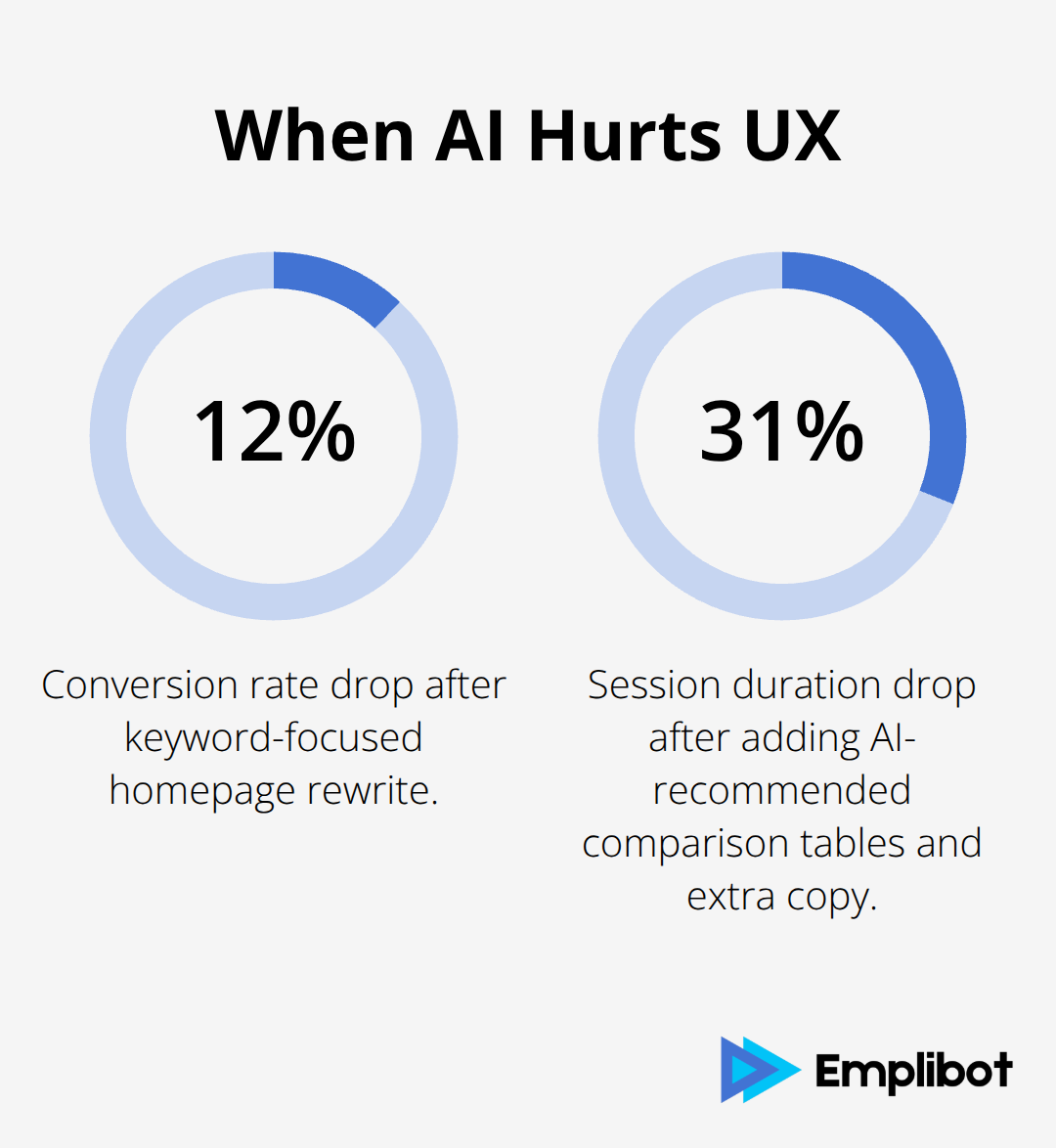
AI tools process data at inhuman speed, but they lack judgment about what matters for your business. Teams often treat AI recommendations as gospel, implementing every suggestion without asking whether it aligns with actual user needs or revenue goals. A SaaS company used an AI content optimizer that flagged their homepage for lacking specific keywords; they rewrote it to match the algorithm’s suggestions and watched conversion rates drop 12% because the new version felt generic and failed to address buyer hesitation. The tool was right about keyword density but wrong about what their audience actually needed to hear.
This happens constantly because AI optimizes for ranking signals, not business outcomes. Your job is to validate every major recommendation against real data from Google Analytics, heatmaps, and conversion tracking before implementing it. If an AI tool suggests restructuring your pricing page to rank for more keywords, test it with a small segment first and measure impact on actual conversions, not just traffic. The mistake isn’t using AI; it’s treating automation as a substitute for strategy.
User Experience Metrics Reveal Hidden Problems
User experience and rankings aren’t enemies, but they feel like it when AI optimization tools push you toward dense keyword placement, longer pages, and structural changes that improve metrics while frustrating visitors. One e-commerce retailer followed AI suggestions to add comparison tables and expand product descriptions; their pages ranked higher but session duration dropped 31% because the added content felt like filler rather than genuine value.
Monitoring AI output requires checking three specific signals: bounce rate changes on updated pages, time-on-page trends, and conversion rate shifts. If rankings climb but these metrics decline, your AI implementation is gaming the system rather than serving users. Set up weekly audits comparing pages before and after AI optimization, tracking bounce rate, pages per session, and revenue per visitor alongside ranking position. When you spot divergence between rankings and engagement, pause the optimization and investigate why. Mass-produced AI content without expert oversight gets systematically downranked, which is why this human review layer prevents the costly mistakes that damage both rankings and reputation over time.
Final Thoughts
AI-powered SEO optimization works best when you stop treating automation as a replacement for strategy. The tools we’ve covered-from content gap analysis to technical audits to metadata testing-deliver real results only when human judgment guides their implementation. Your team needs to validate AI recommendations against actual business metrics, not just ranking positions.
Start small with one AI tool in one area of your SEO strategy. Test it thoroughly, measure results against your actual business goals, and only scale once you’ve proven the approach works for your specific situation. A SaaS company might prioritize AI-powered keyword research and content gap analysis first, while an e-commerce site might begin with technical audits and metadata optimization. Your starting point depends on where your biggest bottleneck exists.
We at Emplibot understand that scaling content and SEO requires both speed and quality. Emplibot automates your WordPress blog and content distribution while keeping you in control of strategy and human oversight-the platform handles keyword research, content creation, and SEO optimization automatically, then distributes across your channels, but you maintain the final say on what gets published and how it aligns with your business goals. AI transforms SEO when it amplifies human judgment, not replaces it.