

Your WordPress blog reaches English speakers. But what about the billions of people who don’t speak English?
At Emplibot, we’ve seen firsthand how WordPress multilingual blogging transforms regional websites into global powerhouses. The technical setup is simpler than most assume, and the business case is undeniable-companies that publish in multiple languages capture markets their competitors ignore.
Why Language Matters More Than You Think
The numbers tell a stark story. 55.5% of web content exists in English, yet 44.5% is in other languages. This split reveals where untapped audiences live. More importantly, localization can boost conversion rates by up to 70%.
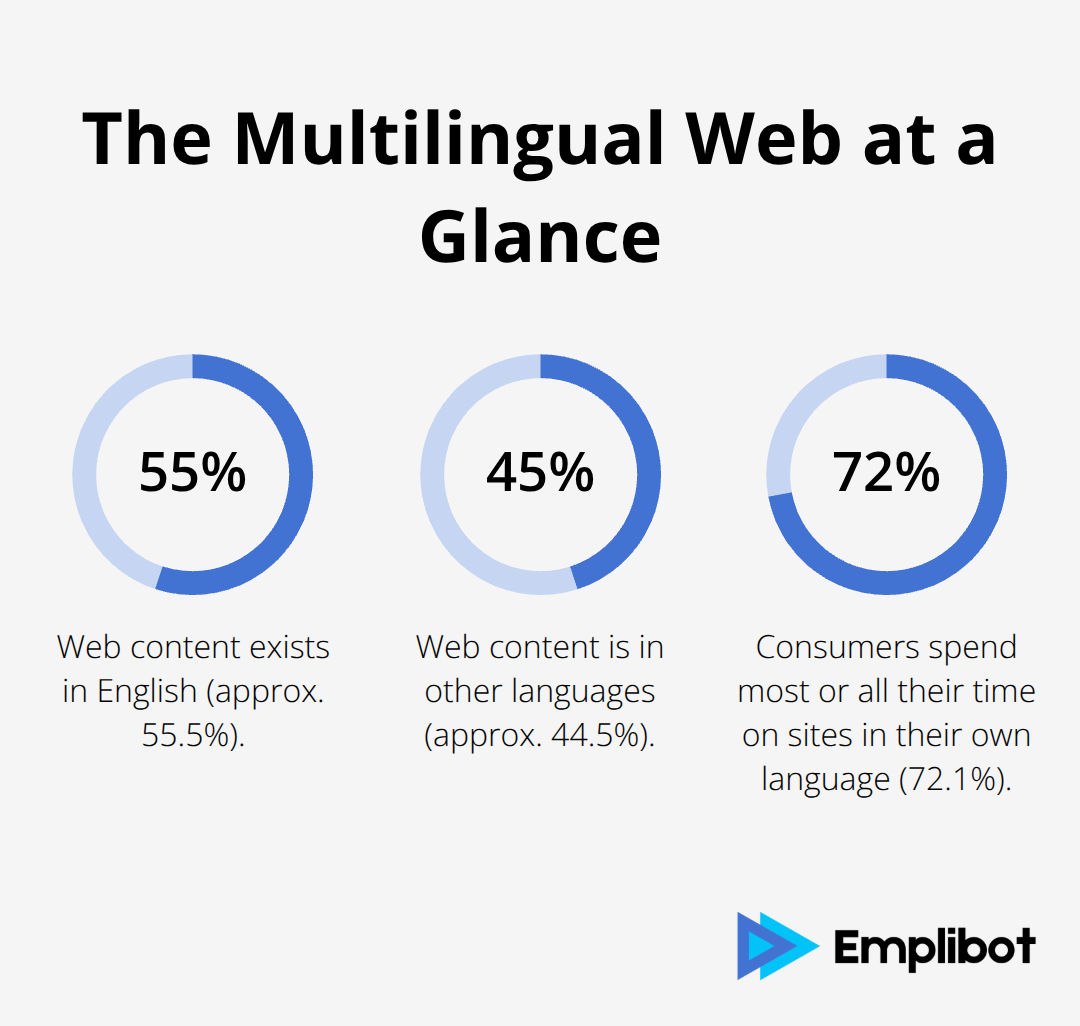
That’s not a marginal improvement-that’s a fundamental shift in how people buy. The CSA study Can’t Read Won’t Buy found that 72.1% of consumers spend most or all their time on websites in their own language. If your WordPress blog speaks only English, you actively exclude nearly three-quarters of potential readers in non-English markets. Within the United States alone, Spanish speakers represent a massive domestic market. Expanding into multiple languages isn’t about reaching distant countries; it’s about capturing customers in your own backyard who prefer reading in their native tongue.
The SEO Advantage of Multilingual Content
Search engines reward multilingual sites that follow proper technical implementation. When you translate your WordPress content and structure it correctly with language-specific URLs, hreflang tags, and separate sitemaps per language, search engines index your translations properly instead of treating them as duplicate content. This means your blog gains visibility in search results across multiple languages and regions. Language-specific keyword research changes everything-what ranks in English differs dramatically from what ranks in Spanish or German. A blog post targeting the English phrase “best coffee maker” competes against millions of results.
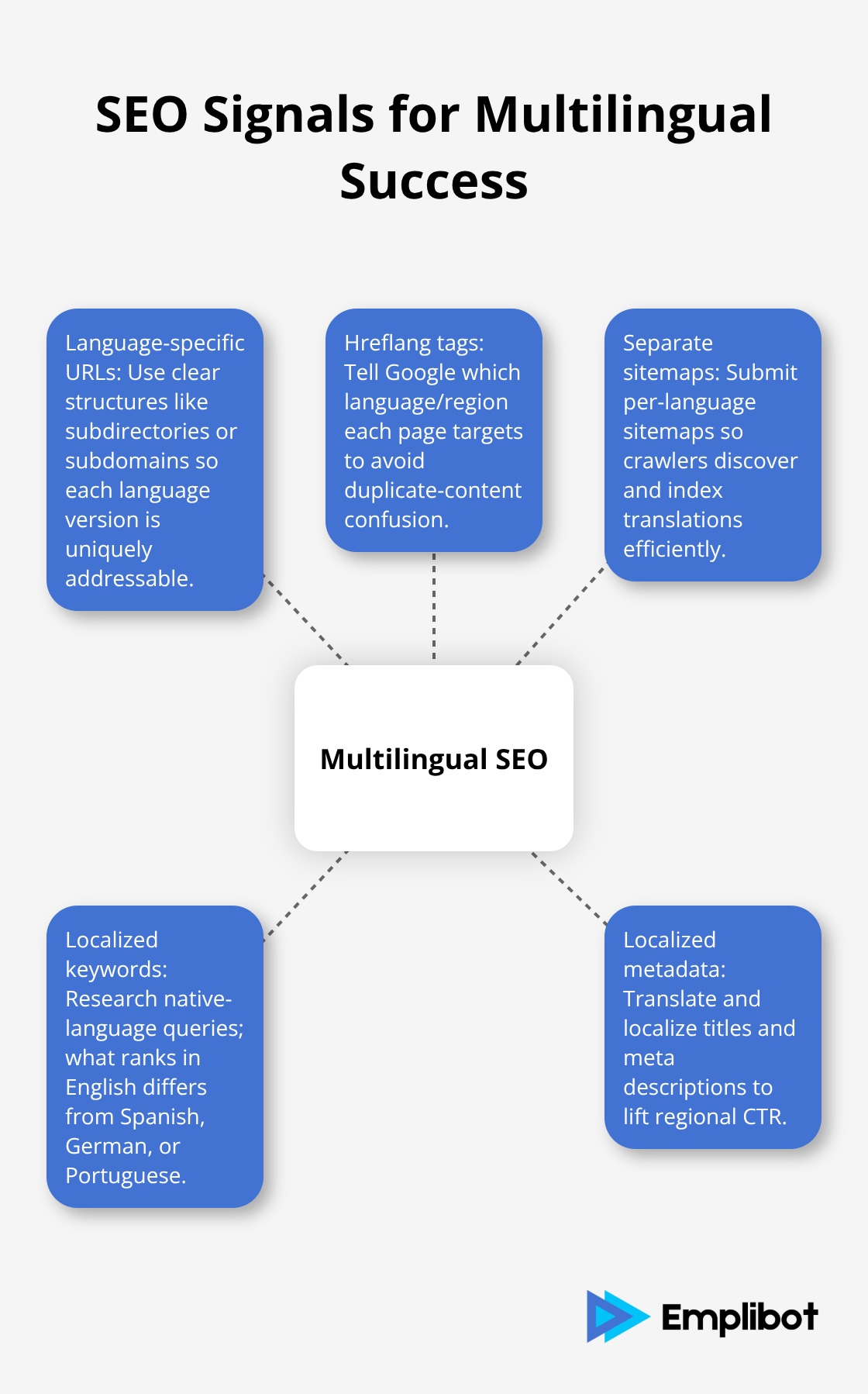
That same topic in Spanish or Portuguese faces far less competition. You capture high-intent traffic that your English-only competitors never see. Metadata matters too. Translating your page titles and meta descriptions into local languages directly improves click-through rates in regional search results. A properly localized meta description in Spanish will outperform an English one in Spanish search results every single time.
Building Credibility Across Markets
Offering content in a visitor’s language signals professionalism and respect. It tells potential customers you’re serious about serving them, not just extracting revenue. Companies that maintain multilingual sites appear more established and trustworthy than those clinging to English-only strategies. This credibility compounds when you move beyond simple translation. Understanding cultural nuances-how humor, examples, and references land differently in each market-separates competent multilingual blogs from great ones. A blog post about productivity tools might reference American pop culture in English but requires completely different references for German or Japanese audiences. Consistency across languages reinforces your brand identity while flexibility in approach shows respect for local contexts. The payoff is measurable: customers in their preferred language read more content, engage more deeply, and convert at higher rates.
What Comes Next
The technical foundation matters as much as the strategy. Your next step involves selecting the right tools and structure to support this multilingual vision without slowing your site or complicating your workflow.
Building Your Multilingual WordPress Foundation
WPML powers over 1.5 million multilingual WordPress sites, and for good reason-it handles the technical complexity that stops most bloggers from going global. The plugin manages language-specific URLs, WPML automatically adds hreflang tags, and sitemaps automatically, eliminating the manual work that tanks productivity. When you install WPML, it translates your entire site structure: navigation menus, widgets, custom post types, and metadata all become manageable from a single dashboard. The alternative-managing separate WordPress installations per language-creates maintenance nightmares. One plugin update breaks on one site, another site falls out of sync with your main content, and suddenly you’re managing three separate databases instead of one cohesive multilingual presence. WPML’s Advanced Translation Editor lets you work with human translators or use AI translation as a baseline for faster publishing. The AI option translates your entire site with context preservation, maintaining your terminology and brand voice across languages. This matters because machine translation without context produces embarrassing mistakes that damage credibility. WPML also handles WooCommerce multilingual functionality if you’re selling products, supporting multi-currency checkout and per-language payment options. Performance stays strong even on large sites-WPML was designed for speed and handles both tiny blogs and enterprise-scale operations without sacrificing load times.
URL Structure and Search Engine Signals
Language-specific URLs prevent the duplicate content nightmare that kills SEO. WPML lets you control whether you use subdirectories like /en/ and /es/, subdomains like en.yourblog.com, or separate domains entirely. Subdirectories rank slightly better than subdomains for SEO because they consolidate domain authority, but subdomains work fine if your hosting setup makes them easier. Never use URL parameters or hidden language detection-search engines struggle with these approaches and your visitors get frustrated when they can’t bookmark the right language version. Hreflang tags are non-negotiable. These HTML annotations tell Google exactly which language version serves which region. Without them, search engines guess, sometimes indexing the wrong version or treating your translations as thin duplicates. WPML generates hreflang tags automatically and places them in your sitemap, solving this problem without manual coding. Language-specific sitemaps matter too. Submit separate sitemaps to Google Search Console for each language so crawlers prioritize discovering your translations instead of wasting crawl budget on duplicate detection. Test this setup in Google Search Console-run a URL inspection on one of your translated pages and verify that Google recognizes it as the correct language variant. If hreflang tags are missing or broken, your multilingual SEO strategy fails before it starts.
Translation Workflow That Scales
Professional translation costs money, but machine translation without review wastes time. The smartest approach combines both: use AI translation to generate initial drafts quickly, then have native speakers review key pages-your homepage, high-traffic blog posts, and any pages targeting conversion. Lower-traffic content can skip professional review if budget is tight. Set clear ownership: decide which team member approves translations before publishing and establish a timeline so translated content doesn’t lag months behind your English version. If you automate your WordPress content creation (as many bloggers do), your translation workflow becomes the bottleneck. Organize this early. Some bloggers translate everything; others translate only their top 20% of content that generates the most traffic. Analyze your analytics to identify which pages deserve professional translation investment. Updates across languages must stay synchronized-if you publish a major revision to an English post, your Spanish translation needs updating too, or you’re serving outdated information to that audience. WPML flags when translations fall out of sync, preventing you from accidentally publishing stale content to your international readers.
Managing Content Consistency Across Languages
Your blog posts, pages, and metadata must align across all language versions, yet each translation requires local adaptation. WPML links translations together so updates in one language trigger notifications for other language versions. This system prevents the chaos of managing five separate content calendars. When you publish a new English post, WPML alerts you that Spanish, German, and French versions need creation. You can then assign these translation tasks to team members or external translators directly from your WordPress dashboard. Metadata translation often gets overlooked, yet it directly impacts your search visibility. Page titles and meta descriptions in each language should reflect local search intent, not just literal translations of your English versions. A blog post about “productivity software” might translate literally into Spanish, but Spanish searchers might actually look for “herramientas de productividad” or “software de gestión de tareas.” Language-specific keyword research reveals these differences and helps you optimize each translation for its target market. The technical setup handles the heavy lifting, but your content strategy determines whether multilingual blogging actually drives traffic and conversions. Your next step involves crafting content that resonates with each audience, not just translating what already works in English.
How to Adapt Content for Each Market
Translation serves as the starting point, not the finish line. A word-for-word translation of your English blog post into Spanish or German produces content that reads awkwardly and fails to connect with local readers. Native speakers immediately sense when content was simply translated rather than written for their market. The difference matters because engagement drops and bounce rates climb when readers feel the content wasn’t created with them in mind.
Take a practical example: a blog post about remote work productivity written for American readers might reference Slack, time zone management across US offices, and American labor laws. That same post translated directly into German loses relevance because German companies operate differently, use different tools, and face different regulatory requirements. A proper German version would discuss GDPR compliance for remote workers, German labor law protections, and tools popular in German businesses. This isn’t just translation-it’s rewriting content for a specific market.
Research Local Search Behavior First
Start with language-specific keyword research before you translate anything. Google Keyword Planner and Ahrefs both support research in multiple languages, revealing that Spanish searchers use different terms than English speakers searching for identical topics. These differences aren’t subtle. A German audience searching for productivity advice might use terms like Zeitmanagement or Arbeitseffizienz rather than direct translations of English phrases.
Your translated content must target these local search terms or it won’t rank in regional search results. This means your Spanish version needs Spanish keywords, your German version needs German keywords, and your French version needs French keywords embedded naturally throughout the content. Metadata optimization amplifies this effect. A meta description written specifically for Spanish searchers using Spanish search intent performs better than one translated literally from English. Write your meta descriptions after researching local search behavior rather than translating English versions. Your click-through rates from regional search results will improve noticeably.
Customize Examples and References for Local Relevance
American blog posts frequently reference American pop culture, sports, business leaders, or current events that mean nothing to international audiences. A blog post mentioning the Super Bowl lands differently in Germany than in the United States. A reference to Silicon Valley startup culture confuses readers in markets where business operates through established corporations and family-owned enterprises.
This doesn’t mean you need completely different content for each region-it means you customize examples and references to resonate locally. If your English post includes a case study about a successful American SaaS company, your German version should feature a German company or European example that your German readers recognize and trust. If your content mentions regulatory requirements, cite the relevant laws and requirements for each market rather than translating American regulations.
Maintain a shared core narrative and structure across languages but customize the examples, data points, and references for each market. Your blog post about marketing automation might use the same framework in English, Spanish, and German, but the English version features American companies and American marketing trends while the German version features German companies and German market statistics. This approach scales better than completely rewriting content for each language while still delivering locally relevant material.
Balance Global Brand Voice With Local Tone
Your brand voice and core messaging must remain consistent across all languages, yet each translation requires a local tone that resonates with regional readers. American directness in communication doesn’t translate well to markets that prefer indirect, relationship-focused business communication. German business writing values precision and formal structure differently than casual English blogs. Japanese communication emphasizes harmony and context in ways that English straightforwardness misses entirely.
Document your brand guidelines in a way that allows flexibility-define your core message and values, then allow translators freedom in how they express those values within each culture. A blog post about customer service philosophy might emphasize speed and efficiency for American readers but emphasize long-term relationships and personal attention for German or Japanese readers. The underlying philosophy stays consistent, but the expression changes.
Assign Native Speakers for Cultural Review
Assign native speakers to review translated content before you publish, not just for accuracy but for tone and cultural appropriateness. A native German speaker catches when translated content sounds foreign or misses cultural nuances that a non-native translator might miss. This review step costs money but protects your credibility in each market.
Update your translation workflow to include cultural review alongside linguistic review. Track which translated posts perform best in each market and adjust your strategy based on what resonates locally. Your highest-performing Spanish post might teach you something about Spanish audience preferences that informs your future Spanish content strategy. Analytics reveal which topics, tones, and approaches work in each region, allowing you to refine your approach over time rather than guessing about what local audiences want.
Final Thoughts
WordPress multilingual blogging transforms your blog from an English-only asset into a global revenue generator when you implement it correctly. You gain access to markets your competitors ignore, improve your search visibility across multiple languages and regions, and build credibility with audiences worldwide. The technical setup no longer requires coding expertise-tools like WPML handle the complexity automatically, leaving you free to focus on content strategy and audience engagement.
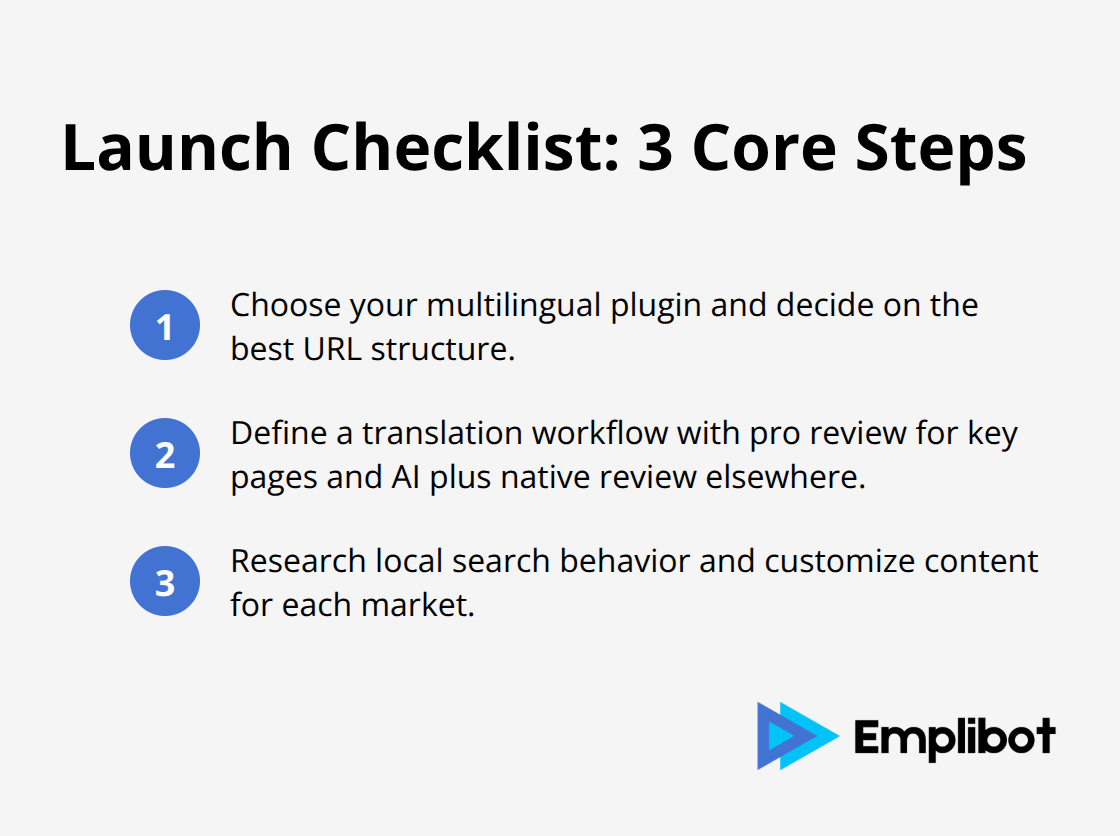
Launching your multilingual blog requires three concrete steps. First, select your multilingual plugin and decide on your URL structure, with subdirectories like /en/ and /es/ working best for SEO. Second, establish your translation workflow by identifying which content deserves professional translation and which can use AI translation with native speaker review. Third, research local search behavior and customize your content for each market rather than publishing literal translations.
Track which topics and tones perform best in each language, update your translated content when you revise English posts, and continuously refine your approach based on regional analytics. If managing content creation across multiple languages feels overwhelming, Emplibot handles keyword research, content creation, and SEO optimization for your WordPress blog, then distributes your content across social platforms. Start with your highest-traffic languages, measure your results, then expand to additional markets as your multilingual presence grows.