

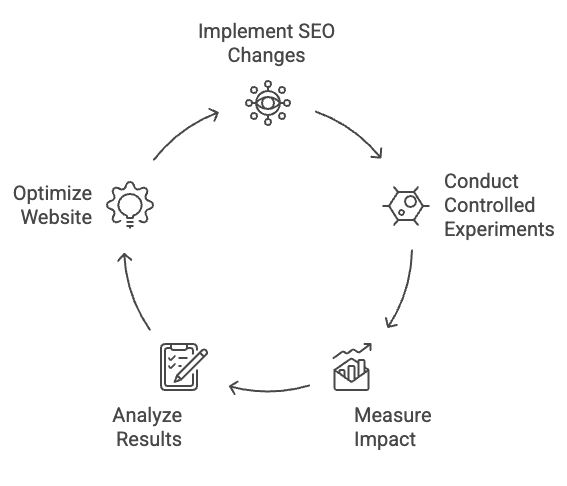
SEO, or Search Engine Optimization, is the cornerstone of online visibility. It’s the art and science of optimizing your website to rank higher in search engine results pages, or SERPs. SEO testing is the process of conducting controlled experiments to measure the impact of SEO changes on a website’s search engine rankings, organic traffic, and ultimately, conversions.
Understanding SEO and Its Importance
What is SEO?
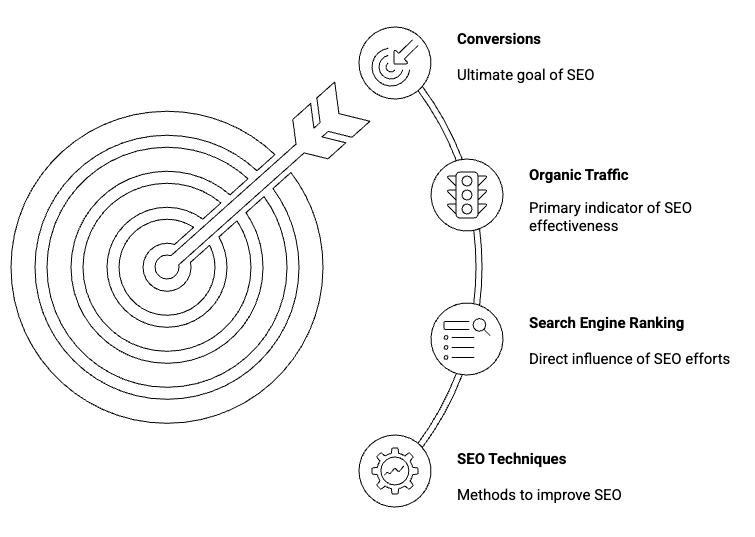
SEO is the process of optimizing a website to improve its visibility in search engine’s unpaid results, often referred to as “organic” results. The better the SEO, the higher the search engine ranking. This involves a variety of techniques, from optimizing on-page elements such as title tags and meta descriptions to building high-quality backlinks and improving website’s technical SEO infrastructure. The end goal of any SEO strategy is to increase organic traffic, improve SEO performance, and drive more conversions.
Key SEO Metrics
SEO success is measured through several key metrics. Specifically, it’s important to monitor metrics such as:
- Organic traffic, a primary indicator of SEO effectiveness.
- Click-through rates (CTR) for your keywords in search results.
Monitoring these and other metrics is crucial for assessing your website’s SEO score and SEO performance.
Impact of SEO on Search Engine Ranking
Effective SEO directly influences a website’s search engine rankings. By optimizing on-page SEO elements, building quality backlinks, and improving technical SEO, websites can climb higher in search results for relevant keywords. Higher rankings translate to increased visibility, leading to more organic traffic. However, search engine algorithms are constantly evolving, making ongoing SEO optimization and testing essential to maintaining and improving search engine rankings.
Types of SEO Tests
Introduction to SEO Tests
SEO tests are pivotal for understanding the impact of changes on a website’s SEO performance. These tests provide actionable insights into what strategies truly work, helping SEO professionals refine their approach and adapt to algorithm updates. Through a structured testing process, SEOs can identify what on-page SEO elements, content strategies, or technical SEO tweaks are most effective in boosting search engine rankings and driving organic traffic. SEO testing allows for data-driven decision-making.
What is a Split Test in SEO?
A split test, also known as A/B testing, is a popular SEO test method used to compare two versions of a webpage or element to determine which performs better. For example, an SEO expert might split test two different title tags or meta descriptions to see which generates a higher click-through rate in search results. Split tests provide valuable insights into optimizing specific elements for better SEO performance and improved search engine rankings.
Free SEO Testing Tools
Several free SEO testing tools are available to help SEOs audit and improve their website’s SEO score. Google Search Console offers insights into keyword rankings, click-through rates, and potential SEO issues. Google Analytics provides data on organic traffic, user behavior, and conversion rates. Additionally, tools like GTmetrix can assess website speed and technical SEO performance. While paid SEO tools often offer more advanced features, these free SEO tools provide a solid foundation for SEO testing and can help identify areas for optimization.

Conducting SEO Tests
How to Get Started with SEO Testing
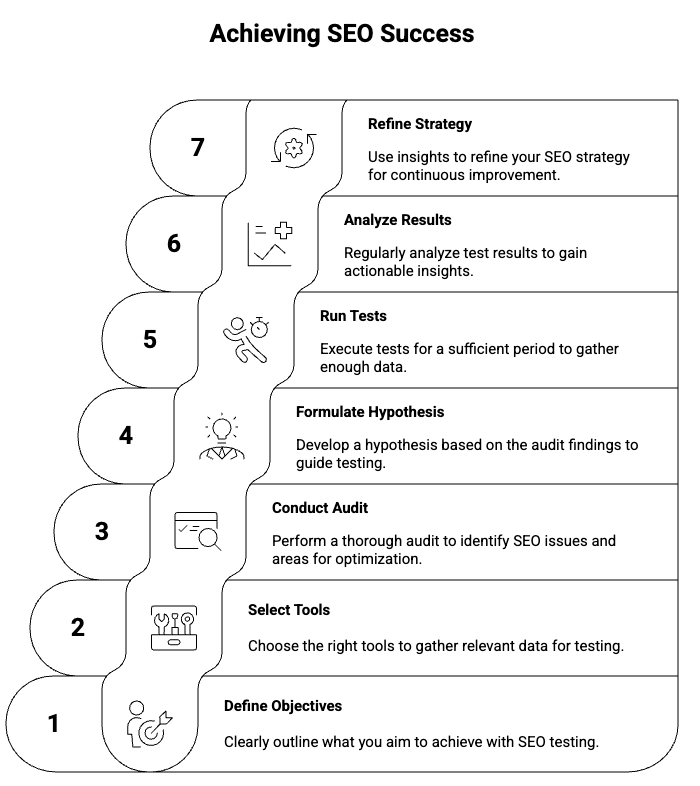
Embarking on SEO testing requires a strategic approach. First, define clear objectives. What specific aspect of your website’s SEO do you want to improve? Are you aiming to increase organic traffic, boost search engine rankings for particular keywords, or improve your click-through rates? Once your goals are defined, select the right SEO tools to gather relevant data. Conduct a thorough SEO audit to identify potential SEO issues and areas for optimization. Formulate a hypothesis.
Best Practices for Effective SEO Testing
To ensure your SEO tests yield reliable results, adhere to best practices. Run tests for a sufficient testing period to gather enough data. Isolate variables to ensure you’re measuring the impact of specific changes. Implement changes carefully, following SEO guidelines. Document the SEO testing process thoroughly. Regularly analyze your SEO test results to gain actionable insights and refine your SEO strategy.
Choosing the Right SEO Test
Selecting the appropriate type of SEO test is crucial for achieving your desired outcomes. If you want to compare two different versions of a webpage element, a split test is an ideal choice. Technical SEO audits can identify potential SEO issues and areas for improvement in your website’s infrastructure. Your choice of SEO test should align with your specific goals and the insights you hope to gain.
Analyzing SEO Test Results
Understanding SEO Test Results
Understanding SEO test results is crucial for making informed decisions about SEO strategy. Analyzing the data from SEO tests helps SEO professionals identify what works and what doesn’t. By carefully analyzing the test results, SEO experts can gain actionable insights, optimize their approach, and improve overall SEO performance.
Key Factors Influencing Test Results
Several key external factors can influence SEO test results. It’s essential to consider these when interpreting data, including:
- Algorithm updates, which can significantly impact rankings.
- Changes in user behavior, which can also affect SEO performance.
Competitive factors may influence search engine rankings. Moreover, seasonality and trends can impact organic traffic and conversion rate.
Using SEO Tools for Analysis
SEO tools are indispensable for analyzing SEO test results effectively. Google Analytics provides comprehensive data on organic traffic, user behavior, and conversion rate. Google Search Console helps monitor keyword rankings, click-through rates, and potential SEO issues. These tools enable SEO professionals to gather actionable insights, track SEO performance, and refine their SEO strategy based on data-driven evidence. 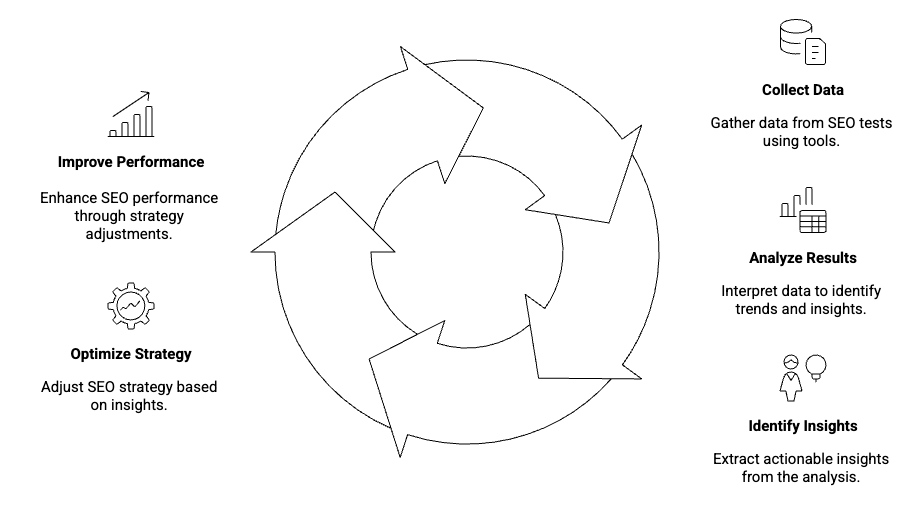
SEO Audits and Optimization
What is an SEO Audit?
An SEO audit is a comprehensive evaluation of a website’s SEO performance to identify areas for optimization and improvement. The audit typically assesses on-page SEO elements, technical SEO factors, backlinks, and keyword rankings. By conducting a thorough SEO audit, SEO experts can gain a clear understanding of a website’s strengths and weaknesses.
Backlinks and Their Role in SEO
Backlinks are a crucial component of SEO. High-quality backlinks from reputable websites can significantly boost search engine rankings and organic traffic. Building a strong backlink profile involves strategies such as creating valuable content that attracts links naturally, reaching out to relevant websites, and participating in industry communities. Monitoring and analyzing backlinks using SEO tools is essential to ensure their quality and effectiveness.
Impactful SEO Strategies
Implementing impactful SEO strategies is essential for achieving sustainable improvements in search engine rankings and organic traffic. These strategies often involve optimizing on-page SEO elements, building high-quality backlinks, improving technical SEO, and creating valuable, user-friendly content. Keyword research is crucial for identifying relevant keywords to target. Regularly conducting SEO tests and analyzing the results helps SEO professionals understand what strategies are most effective.
For businesses looking to streamline their SEO and content creation efforts, Emplibot offers a powerful solution. Emplibot can populate your WordPress site with SEO-friendly articles, complete with keyword research, images, and internal linking, all done automatically. This automation frees up valuable time, enabling you to focus on strategic tasks like SEO testing and analysis.