
Content marketing in 2026 looks nothing like it did five years ago. AI is automating creation, video is dominating feeds, and personalization has become non-negotiable.
At Emplibot, we’ve watched these shifts reshape how brands connect with audiences. This guide breaks down the content marketing strategies for 2026 that actually move the needle.
AI-Powered Content Creation and Personalization
How AI Transforms Content Production
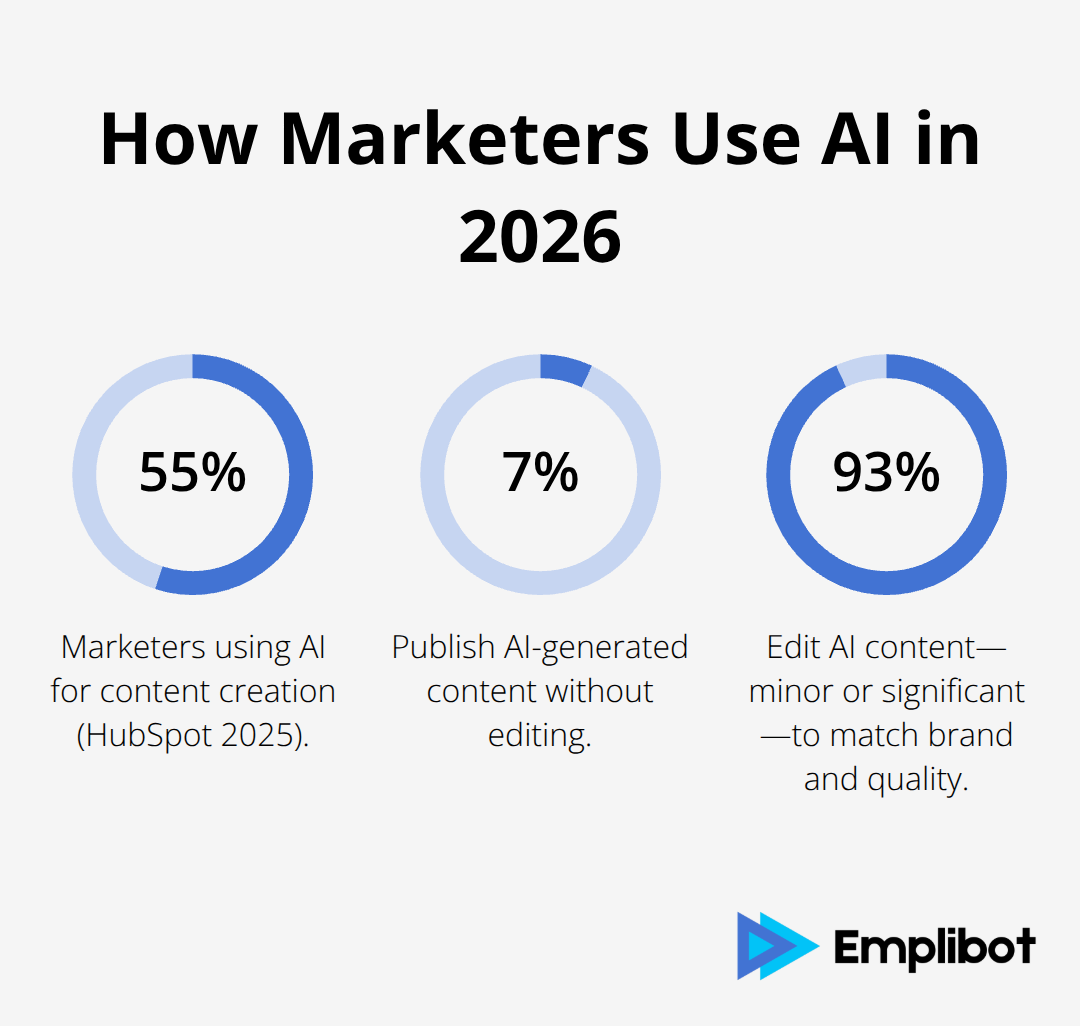
AI content generation has moved past the hype phase into practical, measurable results. According to HubSpot’s 2025 State of AI report, 55% of marketers now use AI for content creation-up 12 percentage points from the previous year. But here’s what matters: only 7% of marketers publish AI-generated content without editing. The other 93% significantly revise or make minor tweaks, treating AI as a productivity multiplier rather than a replacement.
This distinction separates winners from the rest. Tools like Brandwell generate SEO blog posts with roughly 70% human-like output, but that remaining 30% requires your expertise and brand voice. The real win comes from using AI-powered content optimization to handle research, outlines, and first drafts while you focus on storytelling and verification. Surfer SEO accelerates this workflow by providing real-time content optimization scores and keyword insights directly in Google Docs or WordPress, so you’re not guessing whether your content ranks.
HubSpot’s data shows 47% of marketers leverage AI for audience, competitor, and industry research to speed decision-making. This means you can identify trending topics and gaps faster than your competitors.
Personalization That Drives Revenue
Personalization is no longer a nice-to-have-it’s a conversion driver. Yet most personalization attempts fail because they’re surface-level. Real personalization means routing real-time feedback into your content strategy and adjusting messaging based on what your audience actually needs.
Tools like FullStory map user journeys across your site and surface friction points that AI can help you address. This enables you to craft content that speaks directly to where prospects get stuck. Sentiment analysis tools like Gumloop aggregate positive and critical reviews from social media, giving you specific language your audience uses when describing problems. Use that language in your content. When you write about solutions, speak in your audience’s words, not marketing speak.
This approach delivers measurable results: personalized campaigns outperform generic broadcasts because they reduce friction between what readers need and what you offer.
Timing and Distribution Coordination
The second component is timing. AI-powered tools now predict optimal posting windows and audience behavior patterns, but this only works if your content distribution strategy integrates with your workflow from day one. Automating keyword research, content creation, and distribution across WordPress and social platforms ensures your personalized content reaches the right people at the right moment without manual coordination across channels.
This coordination matters because audiences consume content across multiple touchpoints. A post that lands at the wrong time reaches fewer people, regardless of how personalized it is. The brands winning in 2026 treat distribution as part of content strategy, not an afterthought.
With AI handling the heavy lifting on creation and timing, your team shifts focus to what machines can’t replicate: understanding your audience’s deepest needs and crafting narratives that resonate. This foundation sets up the next evolution in content marketing-one where video and interactive formats take center stage.
Video and Interactive Content Dominance
Short-Form Video Reshapes Content Strategy
Short-form video has stopped being optional. According to HubSpot, short-form video dominates as the top content format with the highest ROI. This shift isn’t subtle-it reshapes where brands allocate budget and creative effort. Audiences on TikTok, YouTube Shorts, and Instagram Reels consume content at a different velocity than traditional blog readers, and brands that ignore this reality lose visibility.
Your competitors are already producing video at scale. The ones winning treat video as the primary asset and flow blog posts or social captions from it, rather than treating video as an add-on to their blog strategy. Tools like Crayo accelerate this by automating ideation, production, and editing, which means smaller teams can match the output of larger content operations. If you spend three hours editing a single video, you lose to competitors who spend thirty minutes and publish five videos instead.
Building a Video-First Workflow
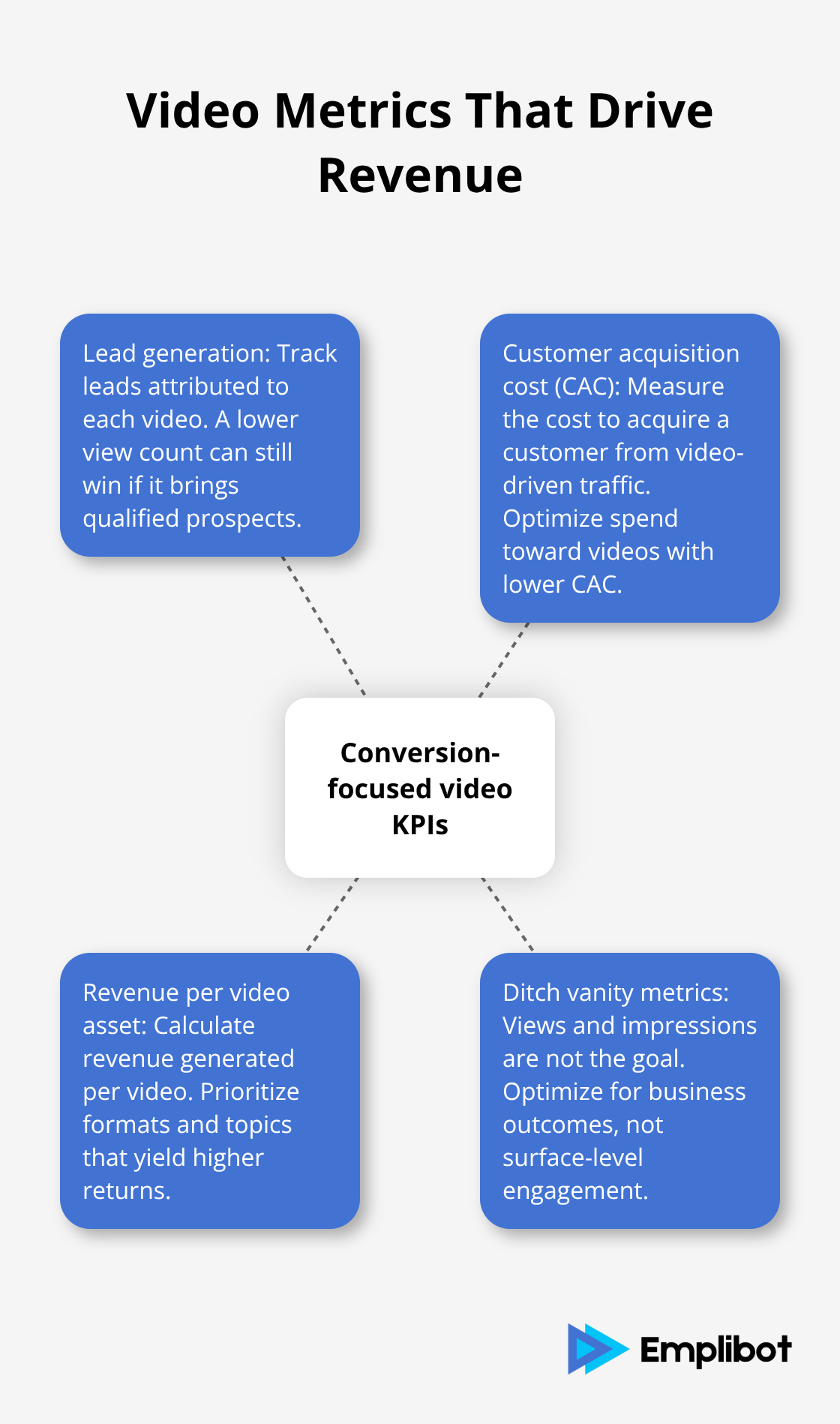
Start with a single platform-YouTube Shorts makes sense because it integrates with your existing Google ecosystem-and repurpose that content across TikTok and Instagram Reels using native tools or automation platforms. Measure what actually drives conversions for your business, not just views. A video with 10,000 views that generates zero leads loses to a video with 2,000 views that drives qualified prospects into your funnel.
Most brands measure vanity metrics and wonder why video doesn’t move revenue. This disconnect happens because they optimize for the wrong signals. Focus instead on metrics that connect to your business outcomes: lead generation, customer acquisition cost, and revenue per video asset.
Interactive Elements Drive Engagement Spikes
Interactive elements amplify video’s effectiveness further. When you embed polls, clickable links, or branching narratives into video content, engagement rates spike because viewers shift from passive consumption to active participation. YouTube’s interactive features and Instagram’s interactive stickers cost nothing to implement but dramatically increase time spent and click-through rates.
Live streaming adds another dimension entirely. Real-time interactions create urgency and authenticity that pre-recorded content struggles to match. Brands hosting live Q&A sessions, product launches, or behind-the-scenes content see higher engagement because audiences feel they access something exclusive and unfiltered.
Timing and Authenticity Win Over Production Value
Schedule live streams around your customer’s peak activity times, not when it’s convenient for your team. A live stream at 9 PM when your audience winds down reaches more people than one at 2 PM when they’re heads-down in work. Automation tools handle the logistics-scheduling, reminders, post-stream distribution-so your team focuses on authentic interaction rather than technical coordination.
This matters because 2026 audiences have developed strong skepticism toward polished, over-produced content. They crave signals of realness. A slightly imperfect live stream with genuine conversation outperforms a heavily edited video with perfect lighting and scripted responses. The brands winning with video aren’t the ones with the biggest production budgets; they’re the ones who understand their audience’s behavior patterns and deliver content in formats that match how those audiences actually consume information.
This video-first approach works only when distribution reaches the right people at the right moment. That’s where strategic multi-channel coordination becomes essential to amplify your reach and convert viewers into customers.
Content Distribution Architecture That Converts
Why Distribution Strategy Matters More Than Most Realize
Most brands waste half their content effort on poor distribution. They publish a blog post on Wednesday at 3 PM because it’s convenient, share it once on LinkedIn, and wonder why engagement tanks. Meanwhile, competitors who coordinate timing, format, and platform pull audiences from the same pool. The difference isn’t better content-it’s smarter distribution architecture. The same article distributed strategically across WordPress, LinkedIn, Facebook, and Twitter generates 3–5 times more traffic than a single-channel approach because different platforms attract different audience segments at different times.
Your content needs to meet audiences where they actually are. A blog post optimized for search rankings reaches different readers than a Twitter thread or LinkedIn carousel, even when they cover identical topics.
Restructuring Content for Platform-Native Formats
The brands winning in 2026 don’t just repurpose content-they restructure it for each platform’s native format and timing requirements. Take your core blog post and transform it into a LinkedIn article with executive takeaways, a Twitter thread highlighting key statistics, Facebook posts with visual callouts, and email segments for different subscriber segments. Each version speaks to how audiences consume on that platform.
A LinkedIn post performs best when it opens with a contrarian statement or surprising statistic, while a Twitter thread works when it breaks complex ideas into digestible chunks. Trying to push identical messaging across all channels wastes reach because you’re fighting platform algorithms that reward format-native content. Tools like Browse AI help you monitor competitor distribution patterns-which platforms they prioritize, how often they post, what times drive engagement-so you can identify gaps and timing opportunities they’re missing.
Staggered Distribution Expands Reach Across Time Zones
Timing coordination matters more than most marketers realize. According to HubSpot, audiences research shows consumers consult multiple sources and switch between devices and platforms. This means a prospect might see your LinkedIn post on mobile during lunch, click through to your WordPress blog on desktop that evening, and return to Twitter the next morning to engage with your thread. Strategic distribution catches them at multiple touchpoints across their journey.
Most teams publish everything at once, assuming simultaneous posting maximizes reach. Actually, staggered distribution across a 24–48 hour window reaches more people because different audience segments check different platforms at different times. Someone scrolling Twitter at 7 AM before work won’t see your 9 AM LinkedIn post, but they’ll catch it when you distribute it again at 3 PM. This isn’t repetition-it’s strategic reach expansion.
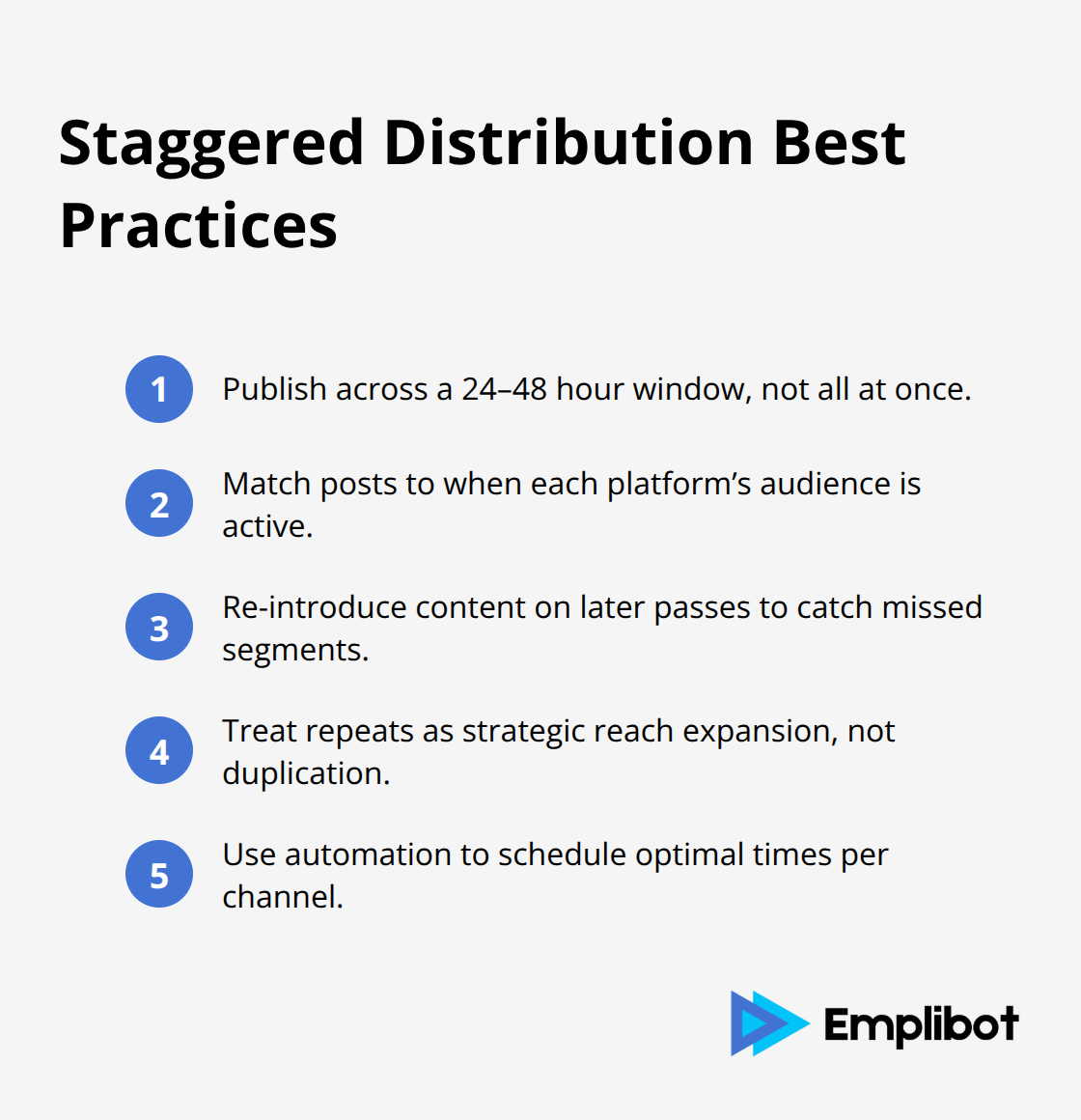
Automation platforms handle this without manual effort, scheduling posts across channels with optimal timing for each platform’s audience behavior.
Measuring Conversions Over Vanity Metrics
The real power emerges when you measure what distribution actually converts. Most brands track vanity metrics-impressions, shares, comments-but ignore conversion metrics that connect to revenue. A LinkedIn post with 500 impressions that generates 10 qualified leads outperforms a post with 5,000 impressions that drives zero leads.
Measure click-through rates to your website, landing page conversion rates from each platform, and cost-per-lead by distribution channel. This data reveals which platforms and timing windows actually move your business forward, so you can double down on what works instead of spreading effort equally across all channels. When you connect distribution decisions to revenue outcomes, your team shifts from guessing about reach to making decisions backed by performance data.
Final Thoughts
The content marketing strategies for 2026 boil down to three shifts: AI handles the mechanical work, video dominates distribution, and personalization drives conversions. Brands that master all three pull ahead of those who treat them as separate initiatives. Honest measurement separates winners from the rest-track leads generated per platform, cost per acquisition by distribution channel, and conversion rates from each content format instead of impressions and vanity metrics.
Automation without sacrificing authenticity forms your second pillar. AI excels at research, outlining, and optimization, but your brand voice and strategic thinking remain irreplaceable. Use AI to compress time spent on repetitive tasks, then invest those hours into understanding your audience’s deepest problems and crafting narratives that resonate. This balance separates generic content from content that converts.
Treat distribution as strategy, not an afterthought-a great blog post published at the wrong time to the wrong platform reaches nobody. Emplibot automates keyword research, content creation, SEO optimization, and distribution across your WordPress blog and social platforms, handling the coordination that most teams struggle with. You focus on strategy and storytelling while the system executes the work.