

Most AI SEO content ideas produce the same bland output as everyone else. Generic topics, recycled angles, and zero differentiation from competitors-that’s what happens when you treat AI as a content factory instead of a strategic tool.
At Emplibot, we’ve seen firsthand how businesses waste time publishing AI-generated content that ranks nowhere and converts even less. The problem isn’t AI itself. The problem is using it without direction, data, or genuine business insights behind it.
This post shows you how to flip that around. We’ll walk through specific angles that actually work, the tools that uncover them, and the workflows that keep your brand voice intact while scaling your output.
Why Most AI Content Stays Generic
The moment you hand a standard prompt to an AI tool, you’re getting the same output thousands of other marketers are generating. ChatGPT, Claude, and Gemini have no idea what makes your business different. They don’t know your customer acquisition costs, your sales cycle length, or why customers actually choose you over competitors. They produce safe, middle-of-the-road content that ranks for nothing because it says nothing worth ranking for. According to Ahrefs data, best X listicles rank as the most cited page types in ChatGPT responses, which means everyone races to publish the same top-10 roundups nobody needs. Your SEO content gets buried not because it’s poorly written, but because it’s indistinguishable from a hundred other posts on the same topic.
Your Business Data Holds the Real Advantage
Generic AI content fails because it lacks business-specific data that competitors don’t have. When you feed an AI tool a vague prompt like “write about productivity tips,” it pulls from training data that includes every productivity post ever published. The result reads like a composite of all that noise. Real differentiation comes from your metrics, your customer feedback, your product roadmap. If you sell project management software and you know that 67% of your customers switched because of poor mobile integration, that insight should drive your content angle. Instead, most businesses publish AI-generated posts about generic productivity habits that competitors covered in 2019.
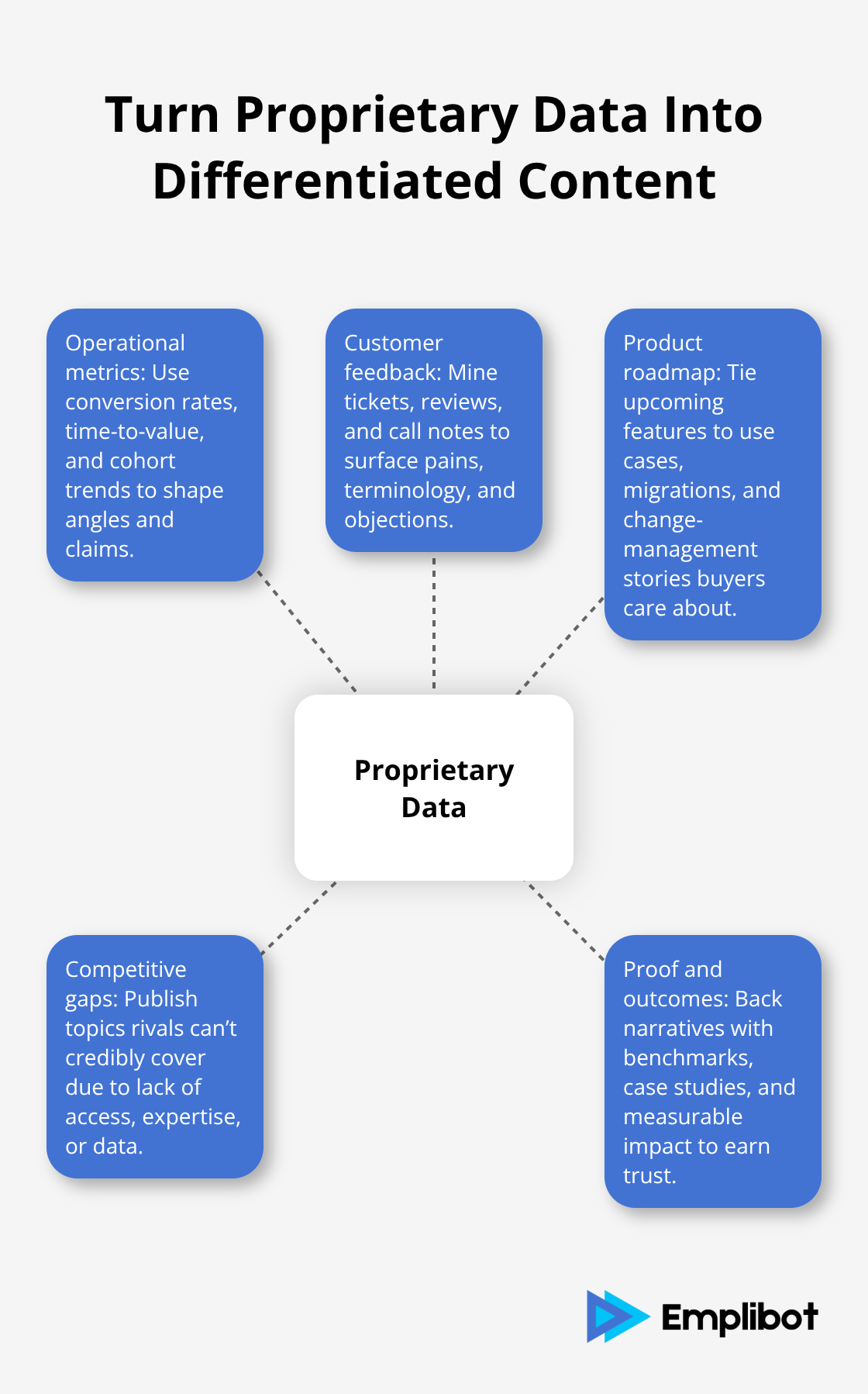
The gap between what AI can produce and what actually converts is your business data.
Competitor analysis matters too. Tools like Surfer SEO and Ahrefs identify content gaps, but most teams use them to spot obvious topics their competitors missed, then ask AI to fill those gaps with predictable content. Real gap analysis means finding topics competitors aren’t covering because they lack the specific expertise, customer data, or product angle to make them credible. You possess information they don’t-use it.
Your Brand Voice Gets Lost in Translation
When you run AI output through minimal editing, your brand voice evaporates into corporate blandness. AI produces helpful, technically correct, utterly forgettable content. It can’t replicate how you actually talk to customers, your perspective on industry problems, or the specific frustrations you solve. Most teams treat AI as a first-draft tool but then publish without the strategic direction that makes content worth reading. The difference between content that converts and content that wastes server space is intentionality. You need to know exactly who you’re writing for, what problem you’re solving for them specifically, and why your solution matters more than alternatives. That direction has to come from you, not from AI. The tools we cover next show you how to inject that direction into your workflow without slowing you down.
How to Build Content From Real Business Data
Anchor Every Piece to Metrics Your Competitors Don’t Have
The fastest way to stop publishing forgettable content is to root every piece in something your competitors lack: your actual business metrics. When you know that customers spend an average of 18 days evaluating your product before buying, or that 42% of your leads come from a specific industry vertical, that becomes your content foundation. Instead of asking AI to write about general decision-making frameworks, you feed it this reality: “Our SaaS platform reduces onboarding time by 5 hours per user. Write a detailed case study showing how this impacts IT teams managing 50+ employees.” That prompt produces something useful because it’s rooted in measurable impact. Most teams skip this step and hand AI vague requests like “write about efficiency gains,” which generates the same tired content everyone else publishes.
Your data is your moat. If your analytics show that customers in healthcare convert at 3.2x the rate of other industries, build content specifically for healthcare buyers instead of writing generic material for everyone. If your customer interviews reveal that the biggest friction point is implementation complexity, not pricing, that insight should shape your content strategy. AI becomes powerful when you tell it what actually matters to your business and your customers, not when you let it guess.
Pair Industry Trends With Implementable Steps
The second angle that converts is pairing genuine industry trends with specific, implementable steps your audience can take today. Seer Interactive found that LLM-driven traffic shows higher conversion rates than organic search for some platforms, with ChatGPT referral traffic converting at 15.9% versus 1.76% for Google organic. That’s a real trend worth exploring, but only if you explain why it matters and what someone should do about it.
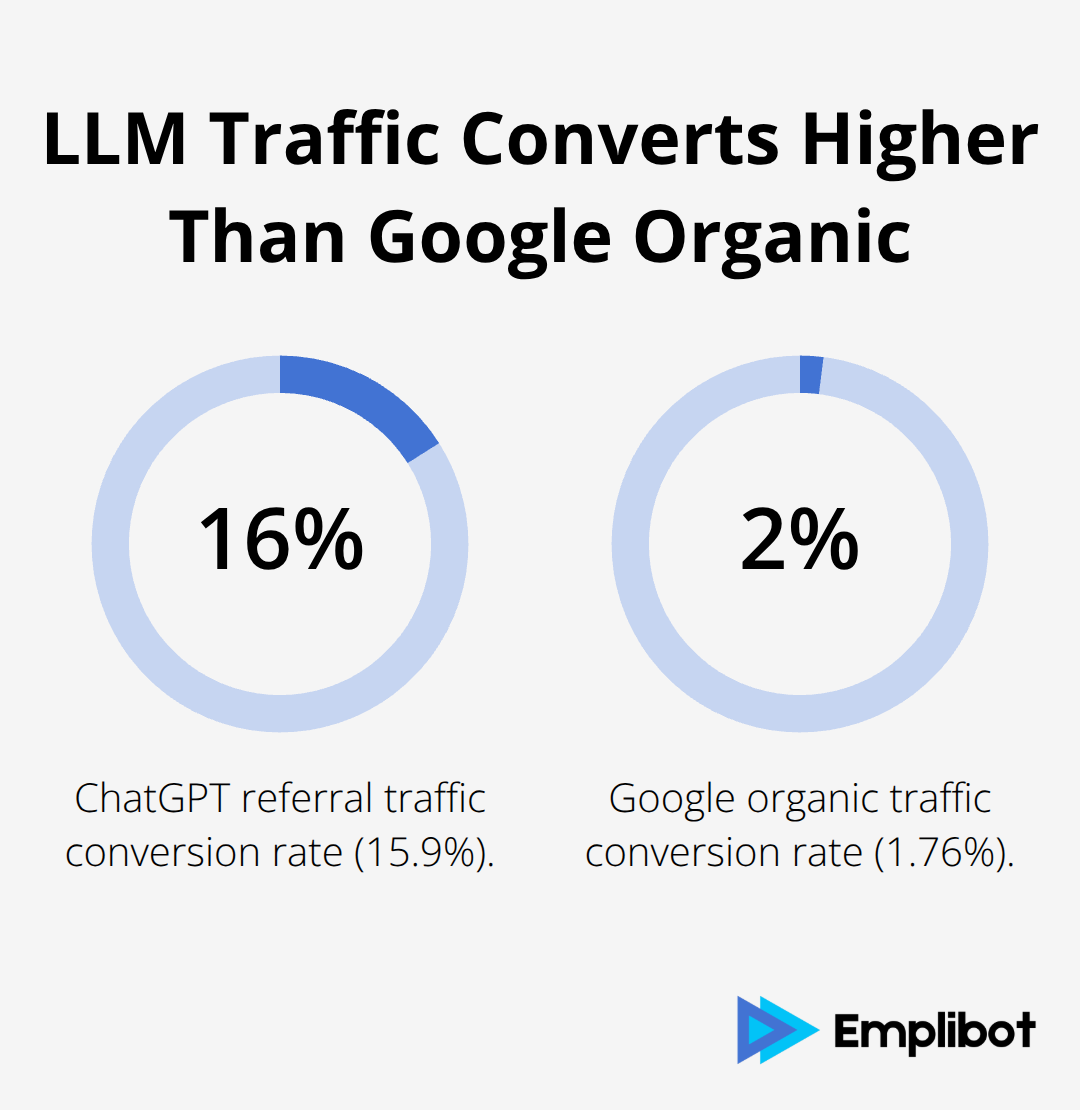
Don’t write “AI is changing how people search.” Instead, write “AI assistants now handle 56% of searches, which means your FAQ page needs structured data markup to appear in AI answers. Here’s exactly how to implement schema markup for your product category.” The difference is stark. One approach is theoretical noise. The other tells someone what to do on Monday morning.
Listen to What Your Market Actually Needs
Address the specific problems your customers mention in support tickets, sales calls, and reviews. If customers repeatedly say they’re confused about implementation timelines, write content that walks through your actual implementation process with real project milestones. If they ask about integration with specific tools, show them working examples with those tools. This isn’t guesswork. This is listening to what your market actually needs and creating content that solves it. The gap between what AI can produce and what actually converts is your business data-and the next section shows you exactly which tools help you extract and organize that data at scale.
Build Distinctive Content From Your Data and Tools
Extract Insights From All Your Data Sources
The tools that matter aren’t the ones that produce content faster. They’re the ones that help you extract what makes your business different, then feed that insight into your creation process. Most teams store customer information across multiple platforms: support tickets in Zendesk, product analytics in Mixpanel or Amplitude, sales data in HubSpot, customer feedback in Slack channels. That fragmentation is exactly why your AI content stays generic. You need a workflow that pulls insights from all these sources into a single brief before you write anything.
If you use Ahrefs for keyword research, Surfer SEO for competitor gap analysis, and Google Analytics for customer behavior patterns, you’re already collecting the pieces. The missing step is synthesis. Create a simple spreadsheet or document where you paste the high-value metrics, the customer complaints that repeat across channels, the product advantages your sales team actually uses to close deals, and the industry trends that matter to your specific market. This becomes your content foundation. When you hand an AI tool a prompt built on data instead of generic instructions, the output becomes immediately more specific and defensible.
Identify Real Gaps Your Competitors Can’t Fill
Tools like Ahrefs and Semrush show you keyword gaps, but most teams misuse them by looking for untouched topics. Real gaps exist where your competitors lack the specific business data, customer access, or product expertise to write credibly. If you sell to mid-market manufacturers and your competitor is a platform serving enterprises, they won’t produce content around the operational challenges unique to mid-market production lines. That’s your gap.
Ask AI to analyze the top-ranking content for your target keywords, then summarize what’s missing: What customer segments aren’t addressed? What implementation details stay vague? What objections go unanswered?
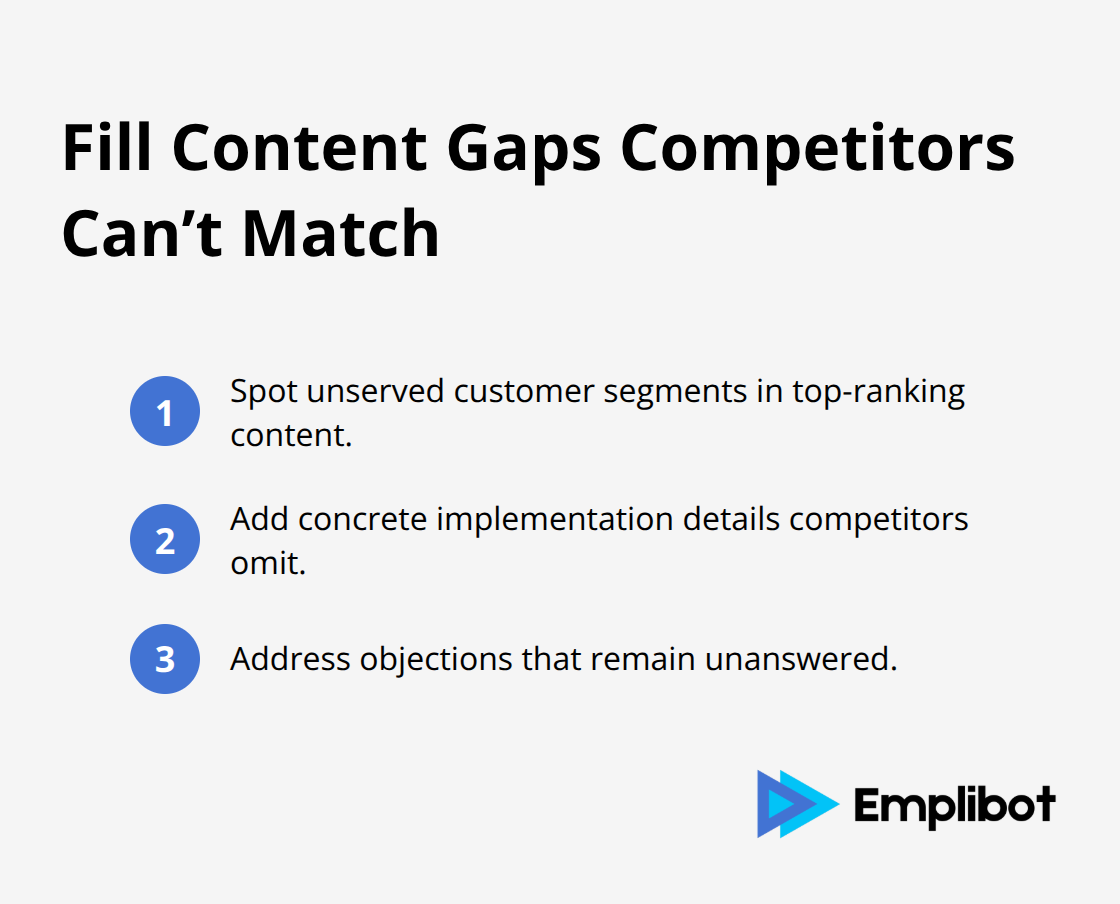
This produces a content brief that’s immediately differentiated because it’s built on what competitors can’t easily replicate. Your specific market knowledge becomes your competitive advantage.
Protect Your Brand Voice Through Templates
Create a content template that includes your tone markers, your typical customer examples, your way of explaining complex concepts, and your specific calls to action. Feed this template into your AI prompts alongside your data brief. Instead of asking AI to write freely, you direct it within guardrails that preserve how your brand actually communicates. AI-generated content works best when paired with your brand’s unique voice, ensuring consistency across channels without sacrificing the strategic direction that makes content worth publishing. Your data, your gaps, and your voice combined create content that actually converts.
Final Thoughts
The real advantage isn’t having access to better AI tools-it’s having a strategic direction that most competitors skip. AI SEO content ideas only work when you anchor them to your business data, your market gaps, and your brand voice. Without that foundation, you publish the same generic output as thousands of other marketers. With it, you create content that actually converts because it solves problems your competitors can’t address.
Start today by pulling your customer data into a single brief before you write anything. Look at your support tickets, your sales conversations, your product analytics. What problems repeat across your channels? What advantages does your team actually use to close deals? What industry trends matter specifically to your market? Feed that into your AI prompts instead of vague requests, and the output shifts immediately from forgettable to defensible. Then identify where your competitors have blind spots using tools like Ahrefs and Surfer SEO-not just to find keyword gaps, but to spot topics your competitors can’t credibly cover because they lack your specific market knowledge.
The businesses winning with AI SEO content ideas right now aren’t the ones publishing fastest. They’re the ones publishing with intention, backed by data their competitors don’t have. Emplibot automates your WordPress blog and social media by handling keyword research, content creation, and SEO optimization tailored to your business, so you can focus on the strategic direction that makes your content matter.