

WordPress sites that rank well share one thing in common: their content is optimized for both search engines and readers. AI content optimization in WordPress automates this process, handling keyword analysis, readability checks, and meta tag refinement without manual effort.
At Emplibot, we’ve seen firsthand how AI-powered optimization cuts through the guesswork. Your SERP rankings improve faster when algorithms handle the technical details while you focus on quality content.
How AI Optimization Analyzes Your Content
Machine learning algorithms in WordPress optimization tools examine your content against the top-ranking pages for your target keyword, then flag gaps in keyword coverage, semantic relevance, and readability. Tools like Surfer SEO analyze the top 20 Google results to build a real-time optimization score from 0 to 100, showing you exactly what’s missing before you hit publish. Rank Math’s Content AI scores keyword coverage as you type, providing context-aware suggestions for body text, headings, titles, and meta descriptions so you’re not guessing whether your content matches search intent. The difference between tools matters here: Clearscope uses advanced natural language processing to weight semantic terms by importance, giving you a prioritized list rather than a generic keyword count.
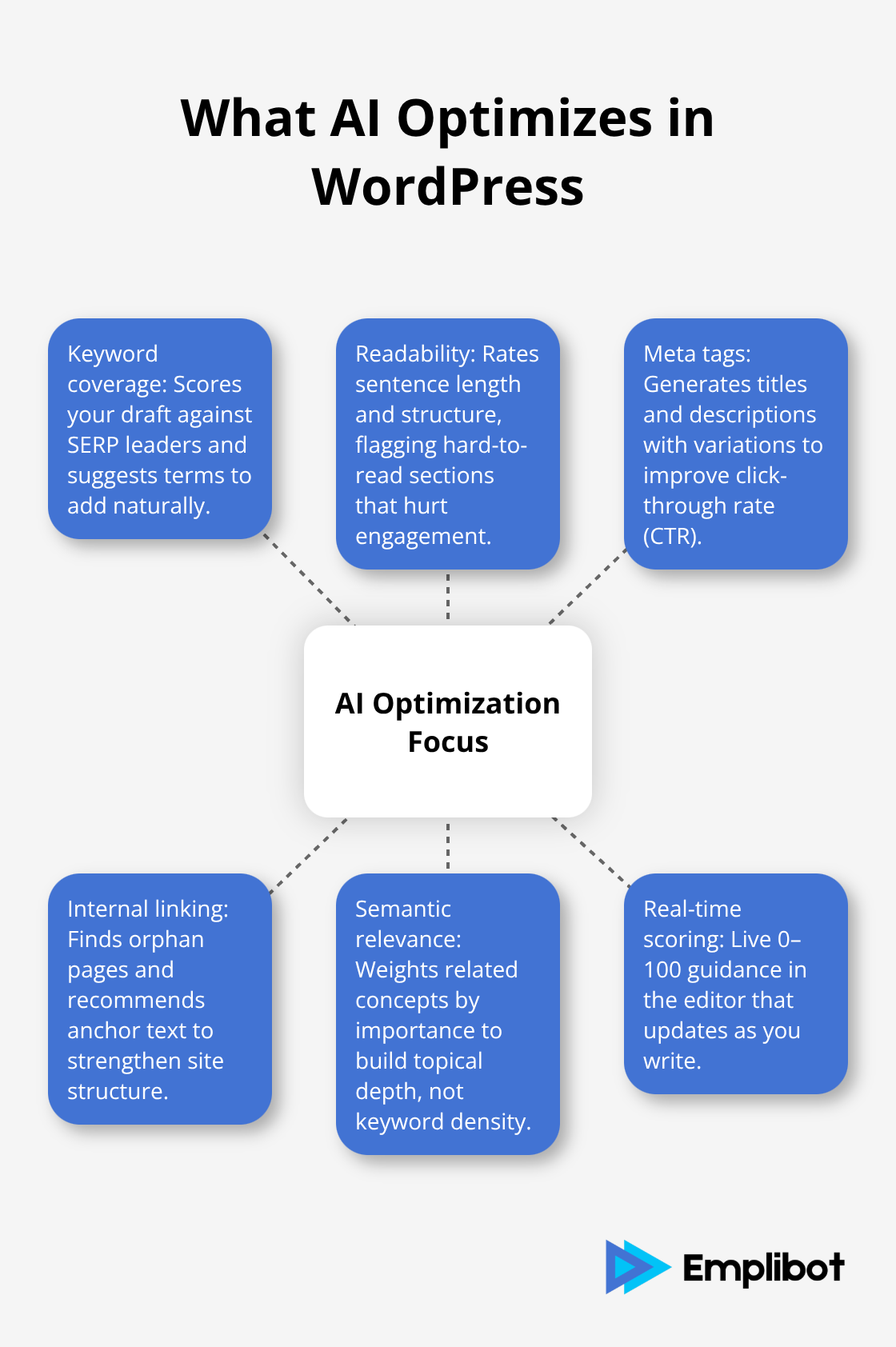
AI content optimization tools analyze top-ranking pages, building a competitor outline in seconds so you can see exactly what structure Google rewards for your topic. This data-driven approach means you optimize with confidence-you’re matching the patterns that already rank.
Real-Time Scoring Keeps You Accountable
The best WordPress optimization plugins embed scoring directly into your editor, eliminating context-switching and guesswork. Surfer’s Content Editor delivers a live score as you write, updating in real time as you add keywords and adjust readability. Outranking combines AI drafting with fact-checking, surfacing source URLs from 50+ pages so you can verify data points before publishing, which matters because Google now heavily penalizes unsubstantiated claims.
Automated Meta Tags and Internal Linking
Meta tags and headers generate automatically across most tools-AIOSEO produces multiple title and meta description options with emoji variants to stand out in SERPs, while Rank Math’s AI generates options tuned specifically for your target keyword. Internal linking automation happens automatically too: AIOSEO’s Link Assistant crawls your site, identifies orphan posts, and suggests anchor text and target pages in one actionable report. This automation saves hours per article while strengthening your site structure (which directly impacts rankings). Your next step involves connecting these tools to your WordPress site and configuring them for your specific business goals.
What AI Actually Optimizes for Rankings
AI optimization tools analyze semantic relationships between terms instead of simply inserting keywords into your content. Tools like Clearscope weight related concepts by importance rather than treating every keyword equally. When you target a keyword like “WordPress SEO,” the AI identifies that pages ranking in the top 20 also heavily discuss “on-page optimization,” “schema markup,” and “internal linking strategy.” Rank Math’s Content AI scores your keyword coverage in real time, flagging whether you’ve adequately covered these semantic clusters before you publish. This matters because Google’s algorithms now reward topical depth over keyword density. A 2,000-word article stuffed with your target keyword ranks worse than a 1,500-word article that thoroughly explores the topic’s supporting concepts. Surfer SEO’s Topical Map clusters keywords into pillar topics and subtopics, surfacing dozens of article angles with individual SERP difficulty scores so you know exactly which related topics will move the needle for your rankings.
Readability Directly Impacts Rankings
Search engines measure user engagement through bounce rate, time on page, and scroll depth. AI tools now score readability in real time to predict how readers will interact with your content. Surfer’s Content Editor assigns a score from 0 to 100 based on sentence length, paragraph structure, and word choice, comparing your draft against the readability metrics of top-ranking pages. If your article averages sentences of 25 words while competitors average 18, the AI flags it immediately. Tools like Frase grade content on an A–F scale using advanced natural language processing, catching jargon-heavy sections that lose readers before they reach your call to action. Shorter sentences and paragraphs outperform longer ones on SERP performance. AIOSEO’s AI Writing Assistant includes readability recommendations alongside keyword suggestions, so you optimize for both search engines and actual humans reading your content.
Internal Linking Automation Strengthens Site Authority
Most WordPress optimization plugins now automate internal linking by scanning your entire site and suggesting which orphan posts should link to high-authority pages and vice versa. AIOSEO’s Link Assistant identifies broken connections in your site structure, recommending anchor text that matches user search intent rather than generic phrases like “click here.” Outranking goes further by auto-linking as you draft, scanning your sitemap and suggesting relevant internal links with appropriate anchor text in real time. This means you strengthen your site structure without extra work. Pages with more internal links pointing to them rank better, and pages that point to high-authority content gain ranking boosts themselves. This automation saves hours per article while ensuring consistency across your site structure, which directly improves crawlability and distributes authority more effectively than manual linking ever could.
How Semantic Analysis Beats Keyword Stuffing
Semantic analysis examines the relationships between words rather than counting keyword frequency. When Rank Math analyzes your content, it looks for supporting terms and related concepts that Google expects to see for your target keyword. This approach (which modern AI tools now standardize) prevents the ranking penalties that plagued older keyword-stuffing tactics. Surfer’s real-time optimization score reflects this shift-it rewards comprehensive topic coverage, not keyword density. Your content ranks higher when it answers the questions your audience actually asks about the topic, which AI tools identify by analyzing what top-ranking pages cover.
Automation Frees You to Focus on Strategy
AI handles the repetitive technical work-meta tags, readability checks, internal linking suggestions, and semantic analysis-while you focus on research, sourcing, and strategic decisions. Tools like Rank Math and AIOSEO embed these features directly into WordPress, eliminating context-switching between platforms. This efficiency compounds across your site: what takes hours to optimize manually takes minutes with automation. The next step involves configuring these tools to match your specific business goals and content strategy.
Setting Up Your Optimization Workflow
Connecting a WordPress optimization tool to your site takes minutes, but the configuration determines whether you’ll see real ranking gains or waste time chasing irrelevant metrics. Most plugins install like any other WordPress extension: AIOSEO, Rank Math, and Surfer all offer one-click installation from the WordPress plugin directory. After activation, you authenticate with the service (creating an account if needed) and grant the plugin permission to scan your site. This initial crawl typically takes 10–30 minutes depending on your site size. Rank Math’s free tier handles unlimited keyword tracking and schema markup without requiring payment, making it an excellent starting point if budget is tight. Paid plans unlock real-time Content AI scoring, which costs about $3.99 per month on top of the free features. Surfer SEO requires a paid subscription starting around $89–$99 per month, but the investment pays for itself quickly on sites with consistent publishing schedules because the real-time 0–100 optimization score directly correlates with ranking improvements.
The key decision here is whether you want a WordPress-native plugin (faster, simpler) or a standalone SaaS platform (deeper data, more flexibility). WordPress plugins like AIOSEO and Rank Math reduce context-switching since you optimize directly in the editor without leaving WordPress. SaaS tools like Surfer and Frase offer richer SERP data and competitor analysis, which matters if you’re competing in saturated niches where marginal optimization gains move the needle.
Configuring Keywords That Match Search Intent
Once connected, specify your target keyword and search intent rather than generic terms. Surfer’s Topical Map immediately surfaces dozens of related topics with individual SERP difficulty scores, helping you identify which angles will realistically rank given your domain authority. If your site is relatively new, target keywords with SERP difficulty scores between 20–40 first and layer in harder terms as your authority grows. Targeting keywords above 60 difficulty wastes optimization effort on new domains.
Rank Math’s Content AI scores keyword coverage as you write, providing context-aware suggestions for where to naturally incorporate your target term and semantic variations. The mistake most publishers make is treating every keyword equally. Clearscope weights semantic terms by importance, showing you which related concepts appear in 80% of top-ranking pages versus 40%, so you prioritize what actually matters for rankings. This distinction saves hours of optimization work by eliminating busywork around marginal keywords.
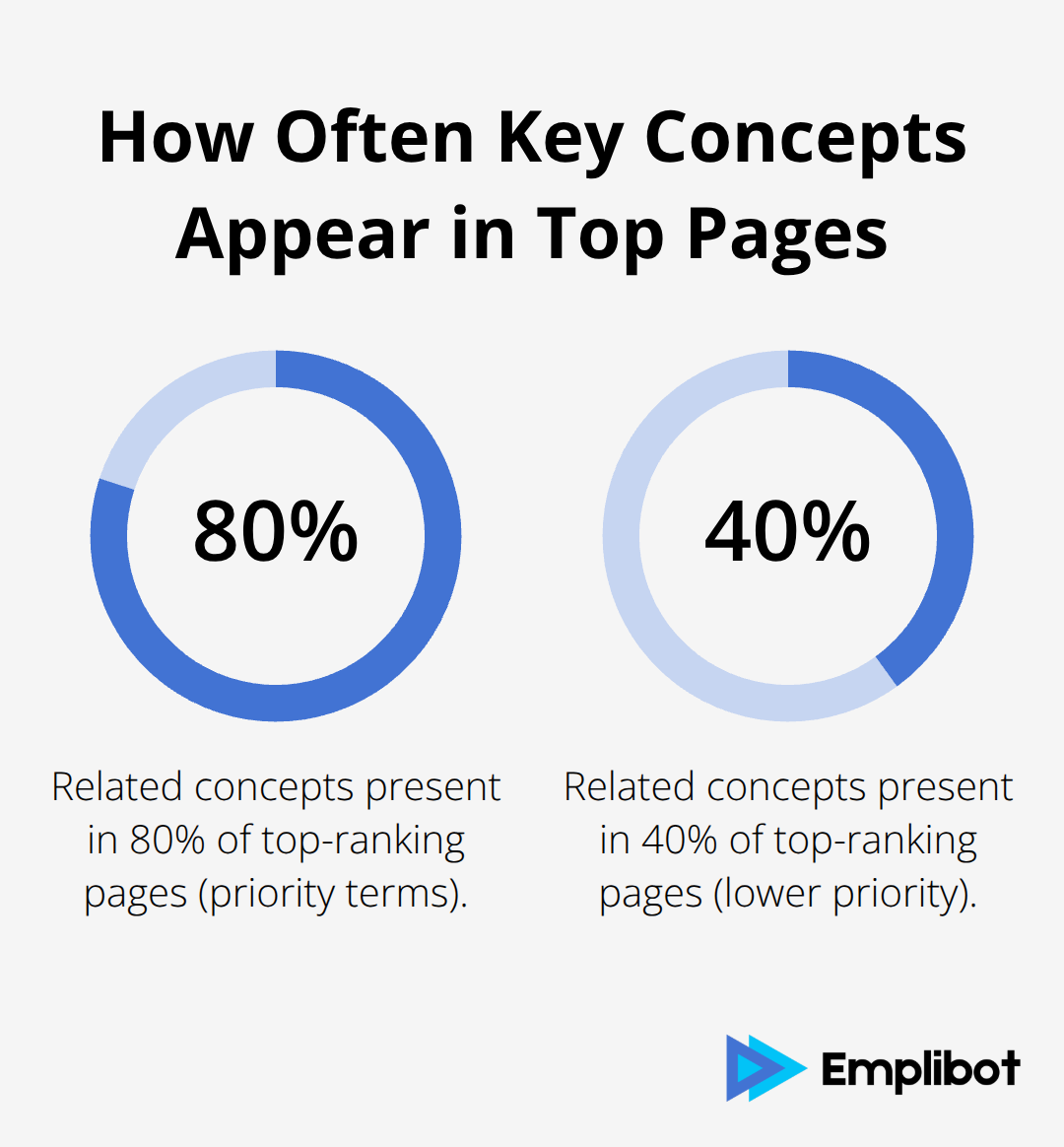
Configure your tool to flag when you’ve missed critical semantic clusters before publishing, not after.
Measuring What Actually Moves Rankings
Track three metrics that correlate directly with SERP improvement: organic traffic from your target keyword (via Google Analytics), your actual keyword ranking position (via rank trackers like Semrush or Ahrefs), and click-through rate from search results. Most WordPress plugins report keyword rankings, but Google Analytics reveals whether optimization actually drives traffic.
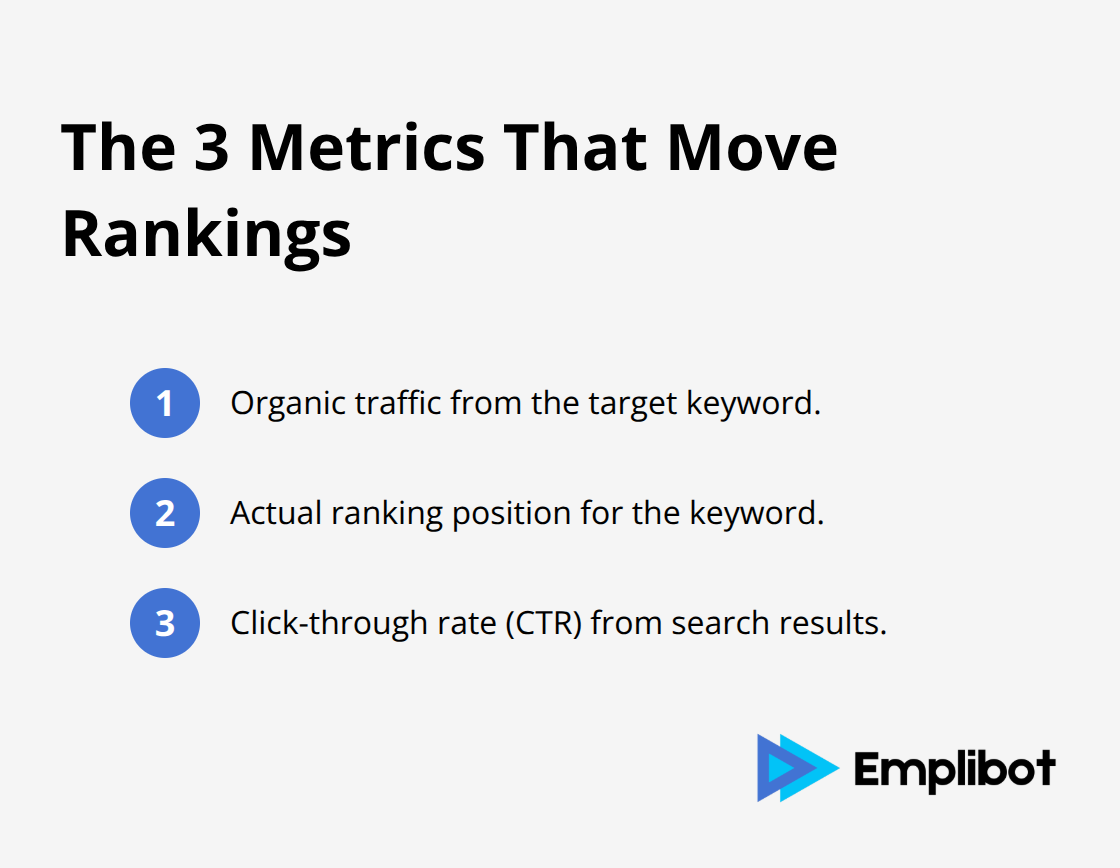
A page that ranks position 8 for a keyword but gets zero clicks means your title and meta description fail to persuade searchers, so adjust those before optimizing content depth further.
Surfer’s Content Editor shows your live optimization score, but that score means nothing if traffic doesn’t increase within 2–4 weeks of publishing. Set a baseline by tracking rankings for 10–15 target keywords before implementing AI optimization, then measure again after 30 days of optimized publishing. If rankings haven’t shifted, the tool isn’t helping your specific niche, and you should test a different platform. Frase includes visitor chat functionality that surfaces real-time questions from people on your site, identifying content gaps with claimed 94% accuracy, which beats guessing about what content to create next.
Final Thoughts
AI content optimization in WordPress delivers measurable SERP improvements because it removes guesswork from the optimization process. When you use tools like Surfer, Rank Math, or AIOSEO, you match your content against real data from top-ranking pages rather than following generic SEO advice. Pages optimized with AI tools see ranking improvements within 2–4 weeks when you track organic traffic from your target keyword, actual ranking position, and click-through rate from search results.
Automation saves hours per article while maintaining quality standards because AI handles the repetitive technical work-meta tag generation, readability checks, internal linking suggestions, and semantic analysis all happen automatically. This efficiency compounds across your site: what takes hours to optimize manually takes minutes with automation. Your team focuses on research and strategic decisions instead of busywork, which directly strengthens your content strategy and backlink-building efforts.
Start with a WordPress-native plugin like Rank Math (free tier available) or layer in a SaaS platform like Surfer if you compete in saturated niches. Set a baseline by tracking 10–15 target keywords before implementing AI content optimization WordPress workflows, then measure again after 30 days of optimized publishing. For businesses looking to automate the entire content creation and optimization process, Emplibot handles keyword research, content creation, and SEO optimization while distributing across WordPress and social platforms.