
Most companies waste hours manually posting content across LinkedIn, Facebook, Twitter, and WordPress. At Emplibot, we’ve seen teams spend entire days on distribution tasks that could be automated.
AI content distribution channels eliminate this friction. You publish once and reach your entire audience simultaneously, with consistent messaging across every platform.
Why Automation Beats Manual Distribution
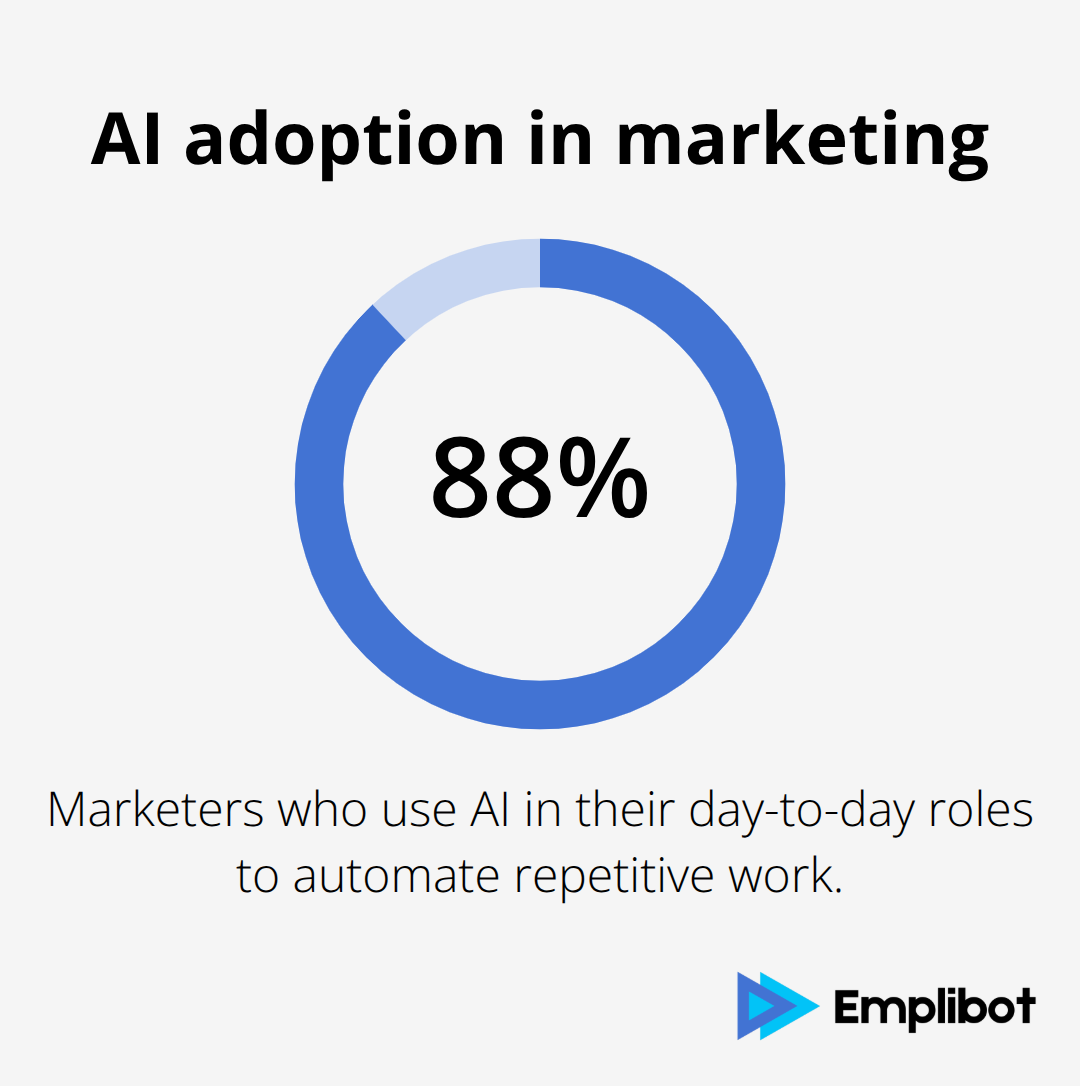
Manually distributing content across platforms creates a bottleneck that strangles productivity. According to Statista, 88% of marketers use AI in their day-to-day roles, and the core reason is simple: automation frees teams from repetitive work. When you post to LinkedIn, Facebook, Twitter, and WordPress separately, you lose hours each week on tasks that don’t move the business forward. Teams spend 20+ hours weekly testing which platforms work, what times convert best, and whether messaging resonates. That’s time stolen from strategy, creativity, and relationship-building with customers.
The Real Cost of Going Slow
Manual distribution means your content reaches only a fraction of your potential audience because posts happen inconsistently and rarely at optimal times. Research shows that audience engagement depends heavily on timing and channel selection. When distribution is manual, you pick arbitrary posting times and hope for the best. AI-driven distribution analyzes millions of data points from past performance and audience behavior to identify when your specific audience actually pays attention. Timing matters enormously: posting frequency impacts impressions significantly, with consistent scheduling driving better results. Multiply that inefficiency across four platforms, and you leave enormous engagement on the table every single week.
Platform-Specific Messaging Drives Trust
What works on Twitter’s fast-paced environment fails on LinkedIn’s professional tone. AI distribution transforms your core content into platform-native formats automatically, ensuring LinkedIn posts sound professional, Twitter content is punchy and timely, and Facebook messaging matches that audience’s casual, relationship-focused expectations. This adaptation happens without manual rewriting. The system understands that your WordPress blog post needs to become a series of social posts, each tailored to its platform’s norms and character limits.
Statista data shows that AI-driven automation reduces repetitive tasks like scheduling, A/B testing, and social media management, enabling teams to focus on higher-value work. More importantly, consistent, platform-appropriate messaging builds brand recognition and trust. When your audience encounters your content in the right format at the right time, they engage more readily and remember your brand. Inconsistent or tone-deaf posts across channels damage credibility and waste the effort behind content creation itself.
Why Channel Selection Matters More Than You Think
Posting everywhere equally wastes resources and dilutes impact. AI-driven distribution analyzes which channels actually drive results for your specific content type and audience (not generic recommendations). A thought leadership piece performs best on LinkedIn, while how-to content thrives on WordPress and YouTube. The system identifies these patterns from your historical performance data and competitive intelligence, then routes each piece to the channels where it will resonate most. This targeted approach means your team stops spreading thin across platforms that don’t matter and concentrates effort where it counts.
The difference between random posting and strategic distribution is measurable. Teams that align content to channel strengths see higher engagement, more qualified leads, and stronger brand authority. Your next step involves understanding which channels your audience actually inhabits and what formats they prefer on each platform.
Where Your Audience Actually Hangs Out
LinkedIn dominates B2B content distribution because professionals actively research solutions there, making it the only platform worth prioritizing if your audience consists of decision-makers and business leaders. AI-driven automation reduces repetitive tasks like scheduling and social media management, which means you can focus on tailoring your targeting strategy specifically for LinkedIn’s professional expectations rather than posting generic updates across every platform. Thought leadership content, case studies, and industry insights perform exceptionally well on LinkedIn because the platform’s algorithm rewards meaningful professional discourse. Facebook reaches broader demographics and works best for relationship-focused messaging, community engagement, and visual storytelling that resonates with general audiences. Twitter’s value lies in real-time engagement and trending topics, where timely responses and industry commentary build authority quickly. However, Twitter requires constant monitoring and fast reactions, making it less suitable for evergreen content strategies. WordPress blogs remain the foundation of content distribution because they directly influence SEO authority and generate long-term organic traffic. Search engines prioritize original, comprehensive content hosted on your own domain, meaning a well-optimized WordPress post drives sustainable traffic months or years after publication, unlike social posts that disappear within days.
Identify Which Platforms Drive Your Results
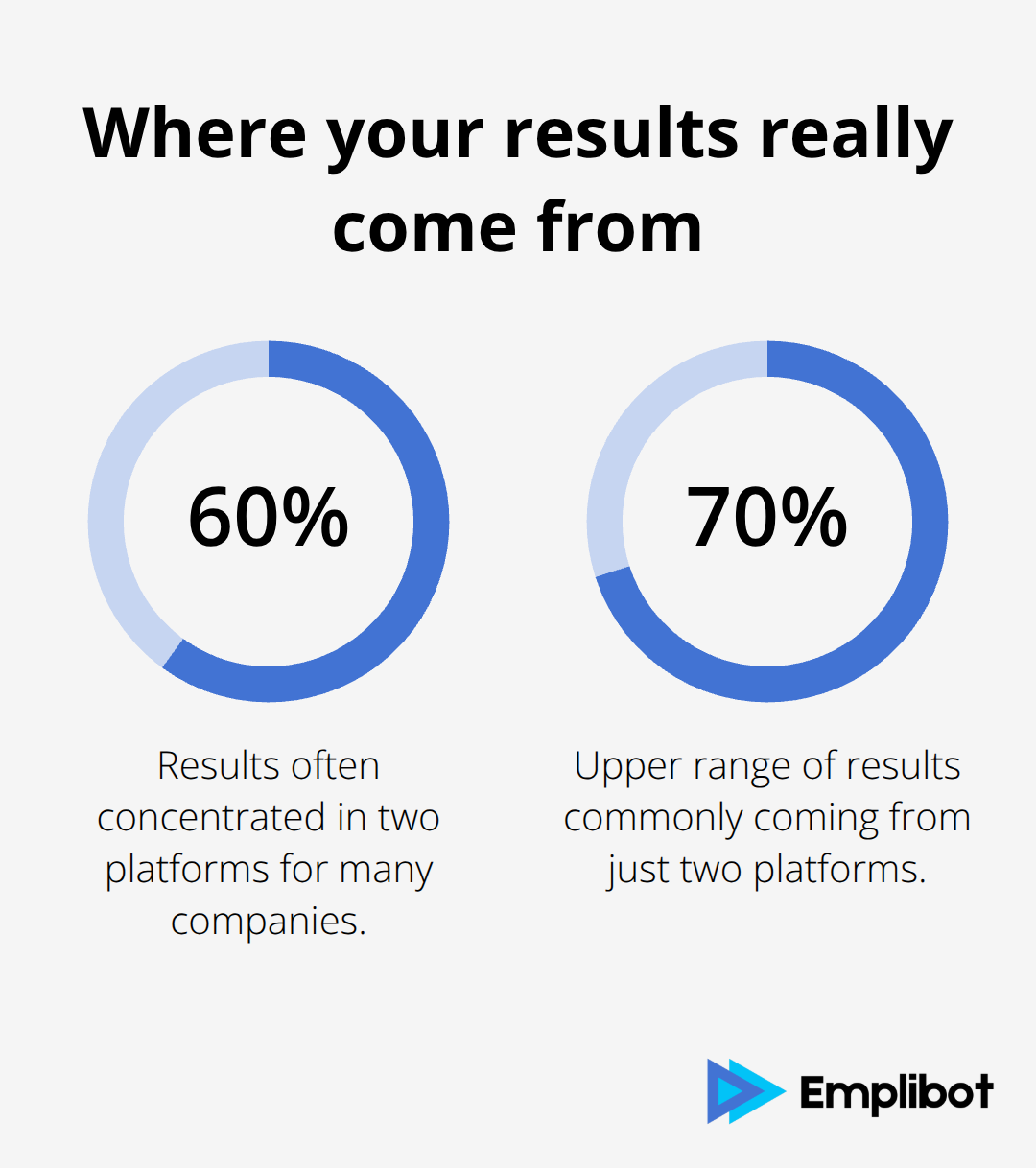
Most companies distribute content to all platforms equally, which wastes resources on channels their audience ignores. AI-driven distribution analyzes your historical performance data to identify which platforms actually drive conversions and engagement for your specific business. If your audience consists of B2B professionals, LinkedIn should receive the majority of your distribution effort because that’s where they research and make purchasing decisions. If you sell to consumers and emphasize visual appeal, Facebook and Instagram deserve more attention. Twitter works for real-time industry commentary and quick customer support, not for promoting blog content directly. The key insight is this: stop assuming your audience uses every platform and instead measure which channels deliver qualified leads and genuine engagement. Most companies discover that 60 to 70 percent of their results come from just two platforms, meaning the remaining platforms drain time without proportional return. AI systems identify these patterns automatically, routing content to high-performing channels first and secondary channels second.
This strategic concentration means your team publishes more frequently on platforms that matter and avoids wasting effort on platforms that generate minimal impact.
Adapt Format and Timing to Each Platform’s Audience
Posting the same content at the same time across all platforms guarantees mediocre results because each platform’s audience has distinct activity patterns and format preferences. LinkedIn audiences check content during work hours, particularly mid-morning and early afternoon on weekdays. Facebook users scroll more frequently in evenings and weekends. Twitter users engage in real-time bursts around news cycles and industry events. WordPress content performs best when you publish consistently and update posts regularly to maintain SEO ranking. AI distribution systems analyze your audience’s specific behavior patterns to determine optimal posting times for each platform separately, not a one-size-fits-all schedule. Format adaptation matters equally: a WordPress blog post becomes a detailed LinkedIn article with professional formatting, a series of shorter Facebook posts emphasizing visual elements, and a thread of quick-hit tweets for Twitter. This adaptation happens automatically within AI systems, eliminating the manual rewriting that consumes hours weekly. The result is that each platform receives content formatted exactly for its norms and audience expectations, driving significantly higher engagement than generic cross-posting ever achieves. Understanding these platform dynamics sets the stage for the next critical step: optimizing your content strategy to maximize performance across all channels simultaneously.
How to Measure What Actually Works Across Platforms
The moment you start distributing content across multiple platforms, you face a critical problem: which channels and posting times actually drive results for your business? Most companies guess. They post at arbitrary times, assume all platforms matter equally, and wonder why some content thrives while other posts vanish into silence. Teams waste months on platforms that generate zero qualified leads because they never measured performance in the first place.
Stop guessing and start measuring. Set up tracking for each platform separately using platform-native analytics tools. LinkedIn’s analytics show you which post types generate the most profile views and engagement from your target job titles. Facebook’s insights reveal which content drives clicks and shares among specific demographic segments. Twitter’s analytics track impressions, engagement rates, and which tweets spark conversations. WordPress analytics show exactly which blog posts drive traffic, how long visitors stay, and whether they convert into leads or customers.
Connect Metrics to Real Business Outcomes
Most teams skip the critical step of connecting these metrics to business outcomes. Posting frequency impacts impressions significantly, but what matters more is whether those impressions convert into qualified leads or sales. Marketing attribution is the process of determining which marketing touchpoints and channels contribute to generating leads, opportunities, and closed deals. If LinkedIn posts drive 40 qualified leads monthly while Twitter generates three, your distribution strategy should prioritize LinkedIn heavily and treat Twitter as a secondary channel.
Your specific audience’s behavior matters infinitely more than industry averages. Pull three to six months of historical performance data from each platform and identify which channels consistently deliver results. Most companies discover that 60 to 70 percent of their actual business results come from just two platforms, meaning the remaining channels drain resources without proportional return.
Discover Your Audience’s True Peak Times
Generic posting time recommendations fail because they ignore your specific audience’s behavior patterns. LinkedIn suggests posting mid-morning on weekdays, but your particular audience of manufacturing executives might engage most actively at 6 AM before their workday starts or during lunch breaks at noon. The only way to discover your audience’s true peak engagement times is to test consistently and track results.
Start posting at different times across a two-week period and measure engagement rates, click-through rates, and conversions for each time slot. Most AI distribution systems analyze your historical performance data to identify patterns automatically, saving you from manual testing. After two to four weeks of consistent posting at varying times, clear patterns emerge. Some platforms show strong engagement in the early morning, others peak in late afternoon, and a few show evening spikes.
Optimize WordPress Content for Search Engines
Your WordPress blog operates on different timing logic entirely: consistency and freshness matter more than specific posting times because search engines reward regularly updated content. Post new blog articles on a consistent schedule, then update older high-performing posts monthly to signal to search engines that your content remains current and authoritative. This approach drives sustainable traffic growth over months and years, unlike social posts that generate traffic for days only.
Adapt Format and Timing to Platform Norms
Format adaptation across platforms happens automatically within AI systems that understand platform-native requirements. A WordPress blog post becomes a detailed LinkedIn article with professional formatting and industry context, a series of shorter Facebook posts emphasizing visual storytelling and community connection, and rapid-fire Twitter threads highlighting key insights with relevant hashtags. Each version reads naturally for its platform because the system understands that LinkedIn audiences expect depth while Twitter audiences demand brevity.
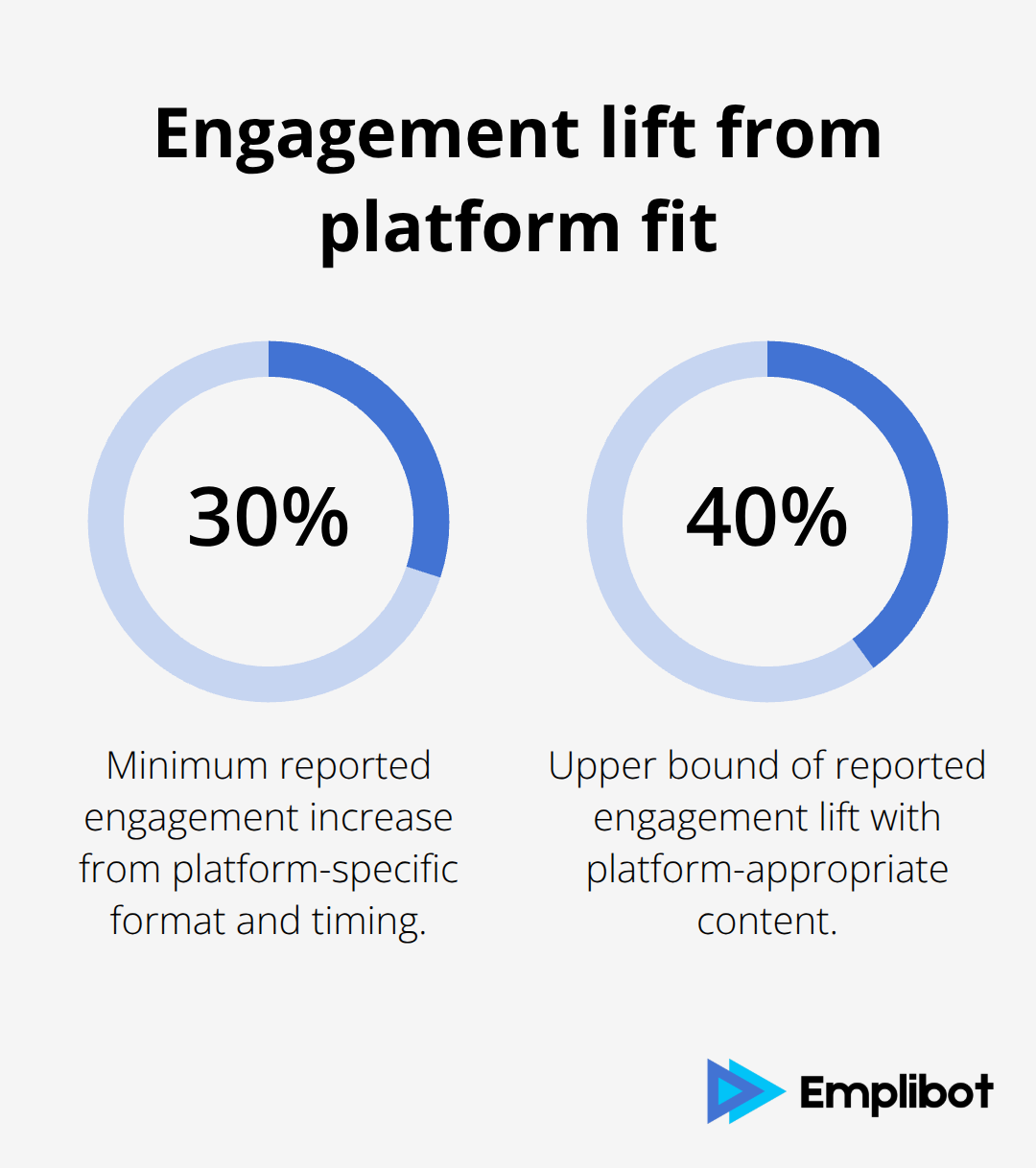
The result of this platform-specific timing and formatting approach is measurable: teams consistently report 30 to 40 percent higher engagement when content matches each platform’s norms and posting times align with their specific audience behavior. AI-driven analytics tools transform how teams evaluate and improve their performance, revealing which channels deserve investment and which ones waste your team’s time.
Final Thoughts
AI content distribution channels eliminate the manual work that drains your team’s productivity without generating proportional results. You’ve learned throughout this guide that posting to LinkedIn, Facebook, Twitter, and WordPress separately wastes hours weekly on tasks that automation handles instantly. The real value emerges when you stop distributing content randomly and start routing it strategically to platforms where your specific audience actually engages, with format and timing that match each channel’s norms.
Teams that align content to channel strengths consistently report 30 to 40 percent higher engagement than those spreading effort equally across all platforms. Your best work reaches far more qualified prospects when posts happen at optimal times with platform-specific formatting rather than generic cross-posting that fails to resonate. Automation analyzes your historical performance data to identify which channels drive real results, what times your audience actually engages, and how to format content for each platform’s specific requirements.
Emplibot automates your WordPress blog and social media by handling everything from keyword research to content creation and SEO optimization, then distributes your content across LinkedIn, Facebook, and Twitter automatically. You publish once and reach your entire audience simultaneously with platform-specific formatting and optimal timing, without the manual work that consumes your team’s time. Start automating your content distribution today and watch your traffic, leads, and sales increase while your team focuses on strategy instead of repetitive publishing tasks.